You’re here for team building questions that work at work. The kind that spark honest conversation, uncover useful preferences, and make the next meeting less stiff. Below you’ll find 110 questions organized by purpose, plus practical ways to run them so energy goes up instead of flatlining.
At a Glance
- Use progressive depth. Start light, then step deeper with consent. This reduces awkwardness and increases real connection.
- Protect psychological safety. Normalize passing, avoid put‑downs, and model candor yourself. Research links this to better team learning and performance.
- Timebox and rotate. Short rounds with rotating prompts keep energy high and airtime balanced.
- Make it active. Turn questions into quick photo, poll, or check‑in challenges for movement and momentum.
Why questions beat icebreakers that die on the vine
Most teams don’t need forced hype. They need structured prompts that surface how people think, communicate, and collaborate. That only happens when the questions are designed for work reality and facilitated with intent.
Two principles underpin this:
- Psychological safety is the floor. When people feel safe to speak up and be a little vulnerable, teams learn faster and perform better. Google’s Project Aristotle flagged psychological safety as the top factor on effective teams, a finding widely summarized in the New York Times. A concise overview of Project Aristotle’s conclusions is a useful primer. (iths.org)
- Progressive depth works. Questions that graduate from light to reflective create more closeness than random small talk. That pattern traces to classic work by Arthur Aron on gradually increasing self‑disclosure. You can skim the original procedure in the 1997 study on generating interpersonal closeness. (journals.sagepub.com)
Key principles that make team questions actually build teams
- Start easy, then opt in. Use warm‑ups, then offer “go deeper?” choices. Never force a personal share.
- Normalize passing. “Pass or ‘phone‑a‑friend’ any time” reduces anxiety and ironically gets more people talking.
- Short answers, real follow‑ups. Cap answers at 30–45 seconds. Then ask one clarifying follow‑up that connects to work.
- Anchor to work moments. Tie prompts to current sprints, launches, onboarding, or retros so stories turn into useful signals.
- Mind your reveals. Avoid prompts that invite oversharing about health, family, money, or trauma. Keep it respectful.
- Model it. Leaders go first, keep it crisp, admit something real, and thank people for candor.
- Remote‑friendly by default. Video fatigue is real in distributed teams. Keep prompts crisp and consider async rounds using chat or a quick poll. For context, Buffer’s ongoing State of Remote Work reports outline shifting remote norms that reward brevity and clarity. (buffer.com)
- Safety over speed. If a share lands awkwardly, thank the attempt, redirect with care, and move on. That’s how safety is protected. For a grounded explainer, see HBS Working Knowledge on building psychological safety. (library.hbs.edu)
How to run question rounds that energize, not drain
- Prep the frame. “Quick round, 30 seconds each, passing is welcome, I’ll go first.”
- Pick a pacing. 5–10 minutes at the top of a meeting or bundled into a monthly connection block.
- Use visible timers. Keeps things moving and diffuses overtalkers.
- Rotate facilitators. New voices, new prompts, better buy‑in.
- Capture useful signals. Workstyle and collaboration prompts often yield agreements you should document.
If you want curated question sets and plays, Atlassian’s Team Playbook includes practical templates like icebreaker activities used by real teams. (atlassian.com)
Turn questions into interactive challenges
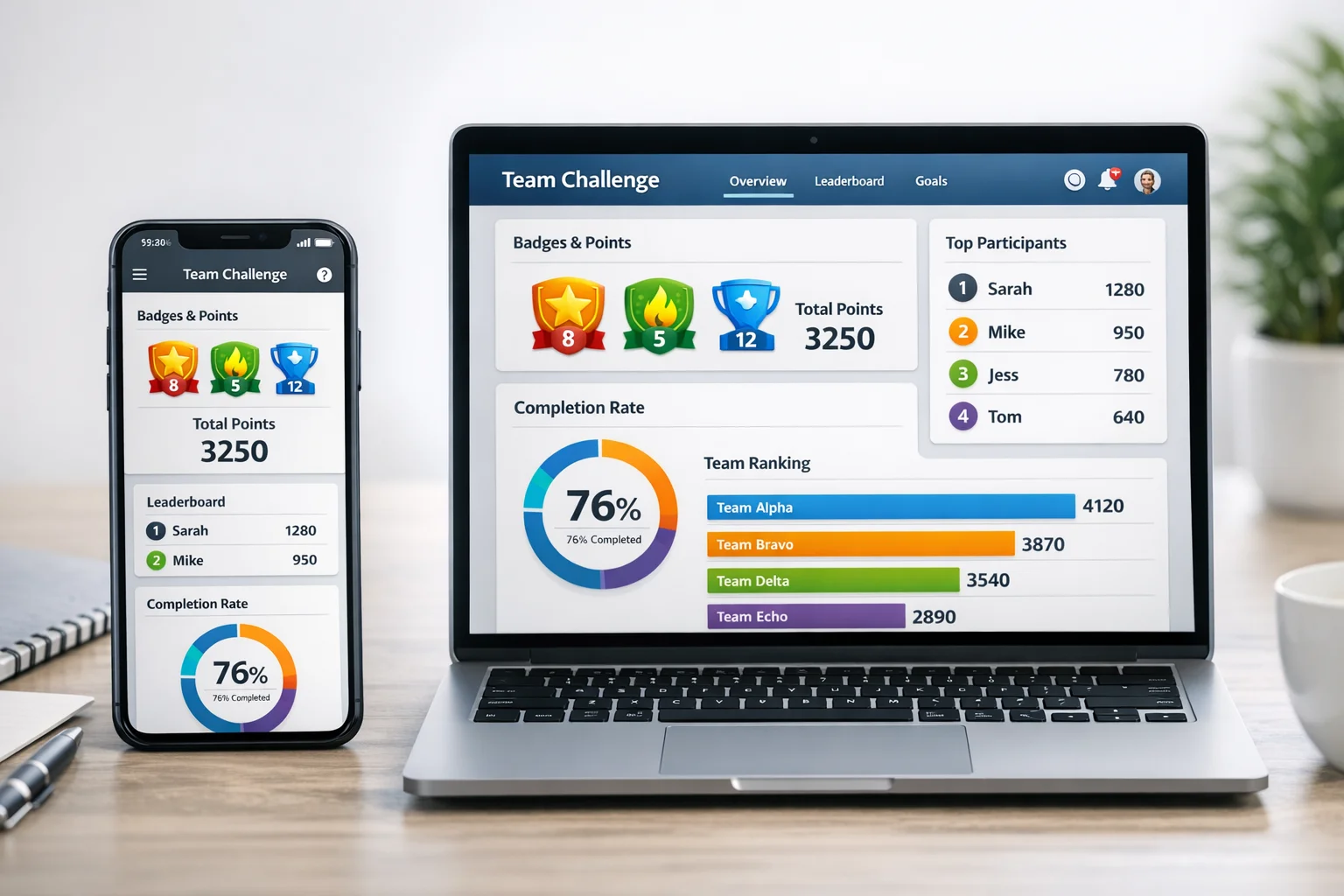
Sometimes a question lands better when it’s active. Using a mobile challenge format adds motion, creativity, and a small spark of competition without turning it into a talent show.
Here’s how this often looks with Scavify’s app-based format:
- Automate the flow. Schedule prompts to unlock during a retreat, orientation, or quarterly kickoff.
- Mix formats. Alternate quick polls, photo prompts, GPS check‑ins, or Q&A for varied energy.
- Make scoring light. Points keep it fun. The good stuff is in the conversations that follow.
Five quick examples:
- [Photo | 25 pts]: “Show your ‘focus mode’ setup in one image.”
- [Q&A | 20 pts]: “Which teammate’s work habit surprised you today and why?”
- [Multiple Choice | 15 pts]: “Morning peak focus time?” Options: 8–10, 10–12, 1–3, 3–5.
- [Video | 40 pts]: “60 seconds on a tool tip you wish you knew sooner.”
- [GPS Check‑in | 30 pts]: “Check in at a space where you do your best thinking.”
110 team building questions for work
Use these as written or tweak for your context. They’re grouped to match different goals. Start in Category 1 or 2, then move deeper as trust builds.
1) Quick icebreakers that aren’t corny (20)
- What small win did you have in the last week?
- What’s a work tip you share most often?
- Coffee, tea, or something else entirely?
- Which app do you open first most mornings?
- What’s your current background noise while working?
- What’s a recent “aha” you had about your role?
- What’s a tool you recommend to everyone once?
- What’s your favorite low‑effort lunch?
- Which emoji best sums up your week so far?
- What’s a habit that quietly helps you at work?
- What’s a meeting that should be an email lately?
- What’s a recent bugbear you solved for good?
- What’s a podcast or article you actually finished?
- What’s a work hill you no longer die on?
- What’s a shortcut you wish more people used?
- What’s your ideal focus soundtrack?
- What’s something you learned the hard way?
- What’s one browser tab you refuse to close?
- What page in your notebook gets the most action?
- What’s a question you wish people asked you more?
2) Workstyle and collaboration signals (15)
- What helps you switch into focus fastest?
- How do you like feedback timed and delivered?
- What’s your current “do not disturb” signal?
- What’s a meeting behavior that earns trust with you?
- What slows your work down more than it should?
- What’s your preferred way to unblock a problem?
- What’s your calendar boundary you protect and why?
- What’s your communication pet peeve and fix?
- What motivates you more than praise or perks?
- What’s a habit you’re trying to build this quarter?
- What makes cross‑team work easier in your view?
- What’s one doc everyone should read before pinging you?
- How do you want decisions documented for clarity?
- What’s your ideal handoff checklist?
- What does “done” look like to you on big tasks?
3) Problem‑solving and retros reflection (15)
- What surprised you most in the last sprint?
- Where did we overengineer something recently?
- What signal told you a project was drifting?
- Which risk do we keep pretending isn’t there?
- What did we ship that changed our assumptions?
- What friction is worth keeping right now and why?
- What’s a decision you’d make again every time?
- Where did we get lucky and how do we bank it?
- What metric masked a real issue this month?
- What tiny experiment would you run next week?
- What’s a constraint that helped creativity lately?
- Where do we need a written rule, not a vibe?
- What’s a failure we learned meaningfully from?
- What should we stop measuring for a quarter?
- What did you wish we asked in the last retro?
4) Values and purpose at work (10)
- What principle guides your toughest calls at work?
- Where do you find meaning in your current role?
- What tradeoff do you respect even when it hurts?
- What customer story you think about most and why?
- What behavior signals our values under pressure?
- Where do our values feel unclear in practice?
- What legacy do you want this project to leave?
- What “non‑negotiable” helps you sleep at night?
- What would make you proud of this year’s work?
- Where do we take ourselves too seriously?
5) Creativity and curiosity (10)
- What’s a rule you’d bend to explore an idea?
- What’s your favorite “wrong” idea that taught a lot?
- What question would you ask our future users?
- What skill would you borrow from a teammate today?
- What’s a weird constraint you’d love to try?
- What’s a stale assumption begging for a test?
- What’s a product you admire outside our industry?
- What’s a line from a book you keep revisiting?
- What’s a tool you’d retire tomorrow and why?
- What’s a “what if” you can’t stop considering?
6) Remote and hybrid specific (10)
- What’s your preferred camera‑on norm and why?
- What async habit saves you the most time?
- What’s your home setup MVP item?
- How do you signal “heads down” to your team?
- What’s a timezone tip you wish more used?
- What’s your rule for meeting invites you decline?
- What’s your Slack channel that actually helps?
- What makes hybrid days feel worth the commute?
- What’s your policy on back‑to‑backs lately?
- What helps you end the day on purpose?
7) New hires and onboarding (10)
- What context would’ve helped you a week sooner?
- What’s a doc you wish existed here and doesn’t?
- What question are you sitting on but shouldn’t be?
- What first impression of our culture surprised you?
- What do you hope to contribute in 90 days?
- What support unlocks your best work fast?
- What past project should we ask you about?
- What’s your favorite way to learn a new codebase/tool?
- What one intro would help you most right now?
- What would make onboarding feel one step smoother?
8) Leadership and managers (10)
- What decision do you want more context on?
- What’s one thing I can remove from your plate?
- Where am I under‑communicating expectations?
- How should I signal “this is changeable” vs “fixed”?
- What feedback cadence works best for you now?
- What meeting should I kill or shorten this month?
- What’s one strength I should use more as a lead?
- Where do you need shielding from noise right now?
- What would make this team a magnet for talent?
- What’s one risk you want me to back you on?
9) Reflection and well‑being (10)
- What energized you most in the last two weeks?
- What drained you more than expected and why?
- What boundary kept you effective recently?
- What do you need more of to do great work?
- What do you need less of to do great work?
- What was a kind act you noticed at work?
- What habit helped you show up better?
- What does a sustainable week look like for you?
- What would make next week 10 percent better?
- What are you grateful for at work today?
Formats that work in meetings, Slack, and async
- Stand‑up topper. One quick question, 30 seconds each, timebox at 6–8 minutes.
- Hot seat mini. One person gets 3 prompts, team asks 2 follow‑ups, total 5 minutes.
- Pair swap. Two rounds in pairs, then share one insight to the group.
- Async thread. Post a question Tuesday morning, keep replies open for 24 hours, summarize highlights Thursday.
- Quarterly mix. 20 minutes across four formats: quick poll, photo share, one reflective prompt, one action takeaway.
If you want a ready‑to‑run set, Atlassian even publishes printable “dicebreakers” to randomize prompts. It’s a playful way to avoid repetition, and it works. See Atlassian’s Dicebreakers PDF. (atlassianblog.wpengine.com)
Common mistakes to skip
- Asking personal questions too soon. Build depth gradually. Respect passes.
- Letting airtime skew. Use timers and rotate who goes first.
- Treating it like trivia. The point is insight, not right answers.
- Skipping the follow‑up. One clarifying question turns a fun share into a useful work signal.
- Ignoring safety repairs. If a comment lands poorly, own it, reset the norm, move on.
In our experience, the shift happens when teams tie these prompts to live work. A good question opens a door. A good follow‑up turns it into a hallway.
FAQs
How often should we use team building questions at work?
Weekly in short bursts works well. Tie deeper rounds to milestones like sprint retros, onboarding cohorts, or quarterly kickoffs. Aim for variety so it never feels like a ritual for its own sake.
What if people hate icebreakers?
Valid. Use work‑adjacent prompts that reveal preferences, not personal histories. Make passing normal, keep it short, and let the most skeptical person facilitate once. Control and brevity convert skeptics.
Are these questions appropriate for cross‑cultural teams?
Yes, if you stay in the professional lane and avoid topics that invite oversharing. Prefer workstyle, collaboration, and problem‑solving prompts. Offer multiple choice where language nuance could misfire.
How do we avoid the same voices dominating?
Timebox answers, rotate who starts, and invite typed responses before speaking. Pair or small‑group formats boost participation without putting anyone on the spot.
Can these questions work asynchronously?
Absolutely. Post a single prompt in a shared channel and keep replies open for 24 hours. Summarize themes and capture any agreements in a simple doc.
What’s the link between questions and team performance?
Questions by themselves don’t drive performance. The gains come when people feel safe to share, learn, and adapt. That dynamic is what Google and academic research highlight as psychological safety. For a short explainer, see this HBS summary and the Project Aristotle article. (library.hbs.edu)
How can we scale this for a large event or orientation?
Use an app‑based format to rotate prompts, capture quick responses, and mix in active challenges. Automate unlocks and keep scores light so the experience feels playful, not performative.
Where can I find more structured icebreaker formats?
The Atlassian Team Playbook has facilitator‑tested formats that slot cleanly into meetings. Skim, borrow, adapt. (atlassian.com)
That’s the point of well‑designed prompts. Less small talk, more signal. And a team that knows how to work together because they’ve actually talked about how they work together.