Solutions
Your first hunt, live this afternoon.
Free to start · No download for participants
Compare team building activities in Phoenix by budget, group size, weather, and goal, with standout indoor, outdoor, and app-led options. Choose confidently.
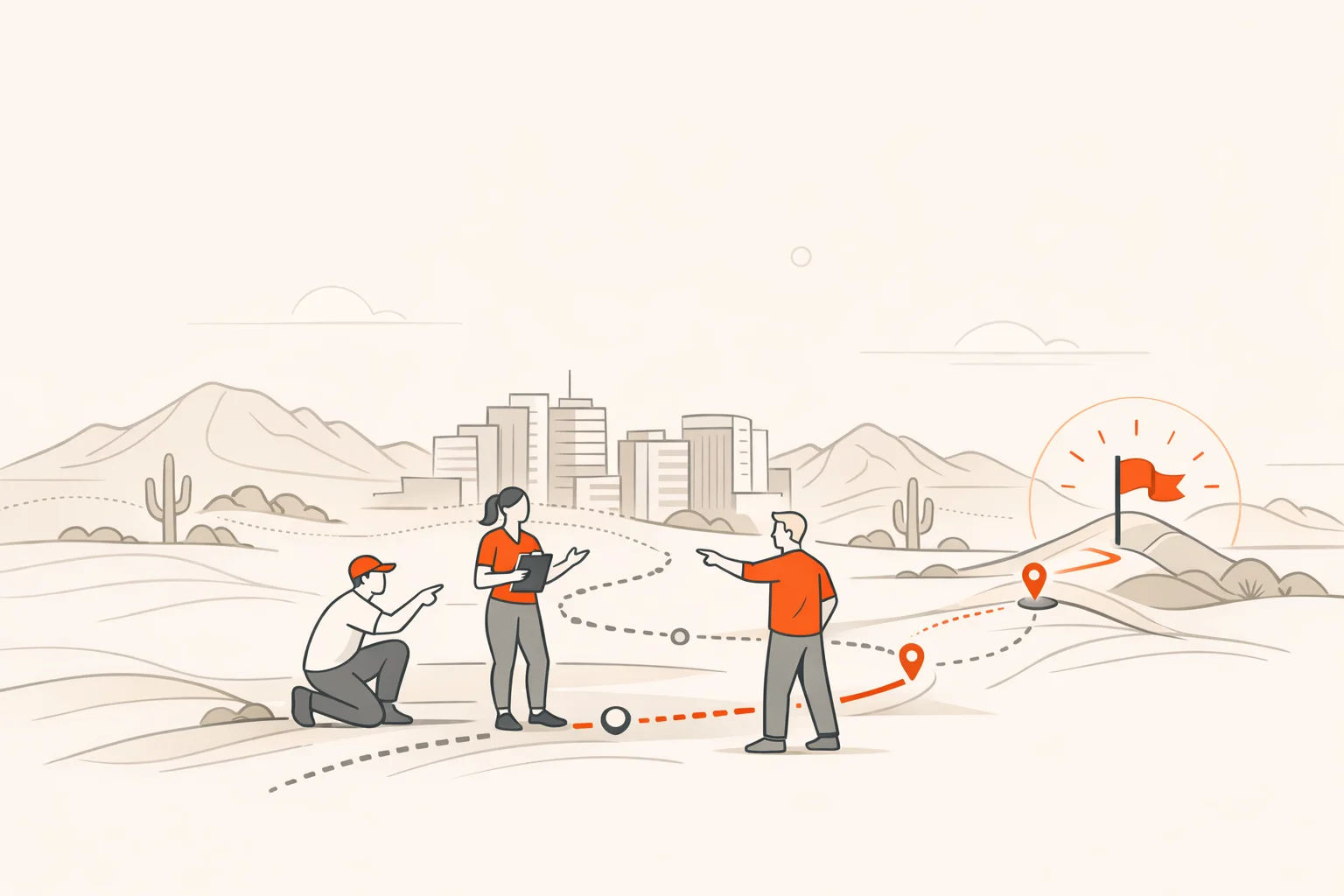
Phoenix rewards good planning. Mornings are golden, shade matters more than you think, and short, high‑energy blocks beat marathon agendas. The Valley’s mix of desert preserves, neighborhood arts, and adaptable indoor venues makes it easy to craft a day that actually builds connection instead of just filling time. This guide gives you 35 proven options, from low‑lift indoor play to memorable outdoor highlights, with practical notes on timing, weather, and flow.
A quick local note for August 24, 2026: some high‑traffic trails periodically close for safety or maintenance. Always check the latest city updates before locking in outdoor plans, especially on Camelback. (phoenix.gov)
Start with constraints: time window, heat, mobility needs, and whether you want cross‑functional mixing or intact teams. Then choose a backbone activity that gets everyone moving and talking, plus one quieter block for reflection or debrief. Finally, set two backup indoor options so you can pivot if the mercury spikes.
Small wins early create momentum the schedule can’t.
Turn downtown Phoenix or Papago Park into a shared game board. Teams complete creative photo/video prompts, scan hidden QR codes, answer local trivia, and check in at GPS spots. A flexible scavenger hunt app lets you mix challenges, track a live leaderboard, and add custom company content without heavy prep.
Place this first or second in your day to get energy up without forcing anyone to perform.
Echo Canyon on Camelback is iconic but strenuous and sometimes closed for safety work. If it’s open and your group is ready, schedule it at sunrise with clear opt‑outs. If not, Piestewa Peak or other preserves offer strong alternatives with less congestion. Confirm trail status before you go. (phoenix.gov)
Split into pods to find living “case studies” on adaptation, color, and form across the Garden’s trails, then regroup for 10‑minute share‑outs. It’s a calm, creative counterweight to high‑output blocks. The Garden’s tours and activities make it easy to scaffold prompts on site. (dbg.org)
Give each team a simple storytelling brief: three photos that show change, contrast, and connection. Walk a compact loop, then trade stories over iced drinks. Roosevelt Row’s density of public art keeps it lively without much walking. (rooseveltrow.org)
A short, spectacular capstone for a long day. Drive to Dobbins Lookout for sweeping views, light snacks, and a short gratitude round. If you want a hike, choose an approachable trail like Holbert and keep a strict pace cut‑off. (phoenix.gov)
For spring and early fall, nothing beats a mild downstream float. Pair mixed teams, assign a simple “river bingo” of wildlife and landmarks, and pencil in a shaded lunch after take‑out. Operators publish current logistics and season dates. (saltrivertubing.com)
Close to central Phoenix and easy to stage. Create short loops with handoffs instead of long, tiring stretches. Rentals and permitted boating make the lake a flexible option when you need water without a long drive. (tempe.gov)
Flat miles, big conversation. Bike along the canal to SRP’s Arizona Falls installation, build a short challenge around water history and engineering, then head back before heat peaks. (srpnet.com)
Bucket‑list material that turns into instant shared memory. Follow with a low‑key breakfast and unstructured hang time so people can linger on the moment. Established local operators run year‑round sunrise flights. (rainbowryders.com)
A confidence builder for cross‑functional pairs. Rotate drivers and navigators, add a simple radio protocol, and keep the debrief focused on how roles changed with terrain.
Private venues, animal talks, and plenty of movement make this a surprisingly smooth evening plan. Keep content light and social, then add a simple team photo mission to keep collaboration visible. (phoenixzoo.org)
Walk the concourses and clubhouse areas, then stage a light skills challenge if available. It’s an easy win for sports‑minded groups, and the venue’s accessibility helps mixed‑mobility teams stay together. (mlb.com)
Assign pods a different lens (light, material, flow, acoustic) and have them document how Wright’s site decisions solved problems. Close with a round of 90‑second reads. Tours run year‑round. (franklloydwright.org)
Use the galleries to spark quick cultural “show and tell,” then book a short facilitated rhythm session to bring it together. A good reset between heavier agenda blocks. (mim.org)
Split into small groups with tightly framed prompts like “find a work that reframes a story you thought you knew,” then run five‑minute lightning shares. Pairs well with a nearby lunch block. (phxart.org)
Set a scrappy build challenge tied to your product or customer journey. Thirty minutes to prototype, ten to test, ten to iterate, five to show. Keep it playful. Venue rentals and programs make logistics easy. (azscience.org)
Randomize teams, rotate roles between rooms, and score process as much as outcome. The point is how teams communicate under a clock, not who finds the last key.
Use professional facilitators to warm up listening and "yes, and" skills without pushing anyone past their edge. Keep it to 60–90 minutes for the best energy curve. (thetorchtheatre.com)
Hands busy, guard down. Quiet conversation flows when everyone’s focused on making something together. Choose glazing or hand‑building to keep pace tight for larger groups. (asyouwishpottery.com)
Assign each station a theme or constraint, timebox fiercely, and have executives judge on creativity and plating, not perfection. End with shared tables instead of podiums.
Pick three stops within walking distance. At each, seated teams trade stories using two prompts. Simple, social, and logistically light.
Formerly Pueblo Grande, this National Historic Landmark offers accessible outdoor trails through a 1,500‑year‑old village site with platform mound and ballcourt. Use a guided visit to spark conversation about water, engineering, and place. (phoenix.gov)
Short swings, quick rotations, and lots of banter. Great for mixed‑ability groups if you keep scoring formats simple and the playlist friendly. (topgolf.com)
Central, green, and easy. Layer a light photo or trivia thread across the afternoon so teams have a shared purpose between casual play. (phoenix.gov)
Put safety brief first, then run a round‑robin with quick eliminations. Keep it snappy, celebrate small improvements, and rotate partners.
Classic for a reason. Pre‑assign balanced lanes, add one wild‑card frame per game, and keep snacks mobile so conversation doesn’t stall.
Seed teams with cross‑functional mixes, use a few company‑specific rounds for laughs, and cap the night before it drifts.
Book a local astrophotography or astronomy guide for an approachable night session. Pair sky viewing with short teach‑backs on seeing patterns in data and in the night sky.
Trust on belay transfers fast to the office. Work with a reputable guide, start with movement drills, and keep first routes modest so everyone gets a clean success.
Teams rotate through easy top‑rope climbs, bouldering problems, and a knot‑tying station. Score variety over difficulty to keep the vibe inclusive.
Short modules on map reading, shade‑finding, and simple signaling make for a memorable morning. Keep water breaks visible and frequent.
Stack chair yoga with a breathwork interlude and a short walk to coffee. It resets the room without eating the schedule.
Use a slow‑looking prompt across the stroll garden, then regroup near the tea house for three takeaways per person. Calming, intentional, and central. (japanesefriendshipgarden.org)
Package assembly lines, park cleanups, or museum support into tidy two‑hour blocks with visible outcomes. Keep the work realistic and the story human.
Give teams one hour to capture five images that answer a theme like “how we collaborate.” Print or project, then let each group narrate in 90 seconds. The discussion afterward is the real win.
What’s the best season for outdoor activities?
Fall through spring delivers the best mix of temps and light. In summer, schedule outdoor time at sunrise or after sunset and weight your plan toward indoor blocks.
How long should each activity run?
Most teams stay engaged for about 60–90 minutes per block. Longer outdoor blocks work if there’s shade, variety, and visible water.
How do we handle heat and safety?
Build hydration and shade into the plan, share county heat guidance in advance, and keep backup indoor options ready. When in doubt, pivot inside. (maricopa.gov)
Are there low‑lift options that still feel special?
Yes. The canal‑to‑Arizona‑Falls ride, a museum micro‑tour, or a Topgolf bracket are easy to stage and deliver real interaction without heavy logistics. (srpnet.com)
Any areas we should check status for before we go?
Camelback’s Echo Canyon section sometimes closes for repairs. Always confirm current conditions on the City of Phoenix site before finalizing details. (phoenix.gov)
What’s a good single‑day flow?
Morning outdoor block, mid‑day indoor creative block, late‑afternoon social capstone. Debriefs after each block keep learning visible without turning the day into training.
How do we make sure quieter teammates participate?
Choose formats where contribution isn’t performative: photo prompts, micro‑tours, short builds, or paired roles in app‑led hunts. Randomize pairs to spread voices.
Planning in Phoenix isn’t about doing everything. It’s about sequencing the right two or three moments so people loosen up, build something together, and leave with shared stories they’ll actually reference next week. The ideas above will get you there — and leave you with a playbook you can remix every quarter.