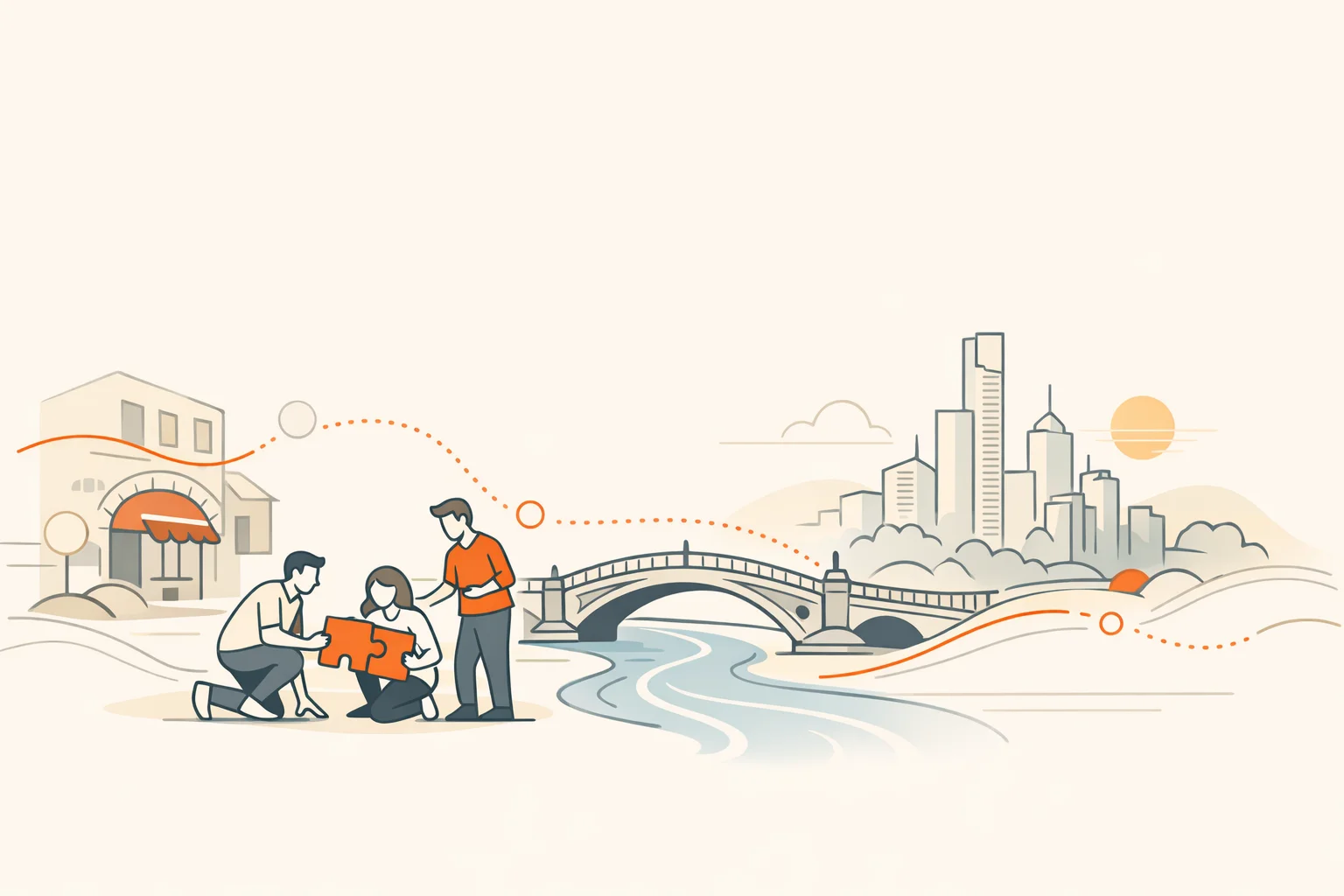
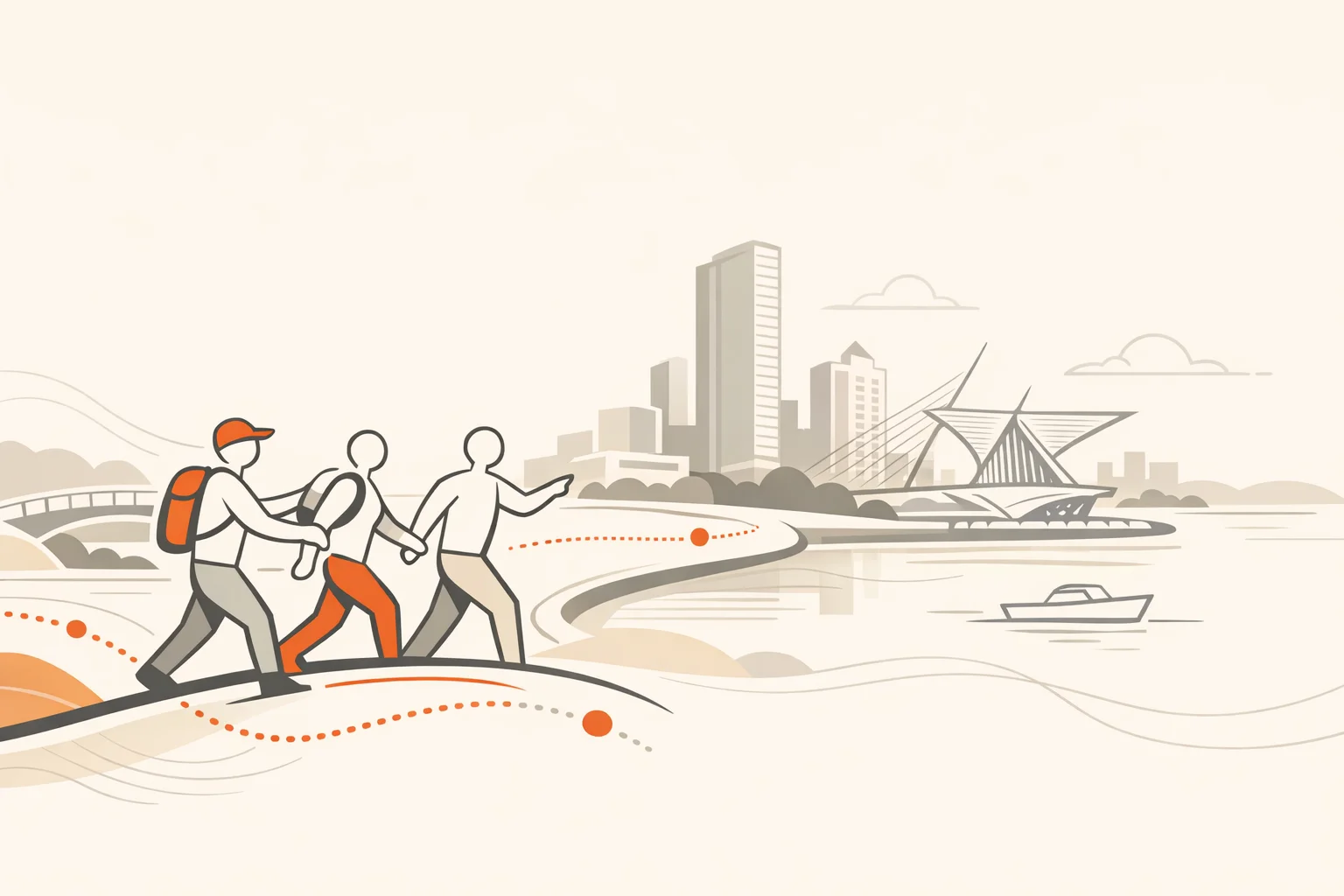
Melbourne rewards teams that get out of the meeting room. The city’s laneways, water, and cultural venues turn group time into a real experience when you choose activities that match your goals, size, weather window, and energy level. This guide is built from field patterns: what consistently works for Melbourne work groups, what quietly fizzles, and how to decide fast.
Most options below are easy to run inside, outside, or both. Where local context matters, we call it out. When it helps confidence, we point to authoritative local sources, from the city’s street art walks to climate norms from Australia’s Bureau of Meteorology. The goal isn’t a longer list. It’s a smarter short list you can book with conviction.
- Choose by goal first, then weather and group size, not novelty.
- Melbourne’s laneways and riverside make outdoor options strong, but backup indoor plans win.
- App‑led hunts scale fast and create visible, measurable outcomes without heavy facilitation.
- Short, mixed‑format challenges beat long marathons for higher participation.
Why Melbourne is a standout city for team building
A compact CBD, iconic laneways, waterfront promenades, and dense culture mean you can mix collaboration with movement in a small radius. Street‑art walks through Hosier, AC/DC, and Blender lanes are a legitimate canvas for creative challenges, with the city’s own guides recognizing the laneways as a world‑class asset (Melbourne street art). Cultural anchors like ACMI at Fed Square give you weather‑proof options minutes away from open‑air routes.
A pattern we keep seeing: activities that nudge people to notice the city together tend to produce richer post‑event conversations back at work than purely venue‑bound entertainment. The location becomes part of the debrief language.
The right setting does half the work; the right structure finishes the job.
How to choose the right activity in Melbourne
Pick the activity that serves the outcome, then adapt for the setting. Use this quick decision frame.
- Define your top two outcomes and ignore the rest for today.
- Decide how much movement you want and how inclusive it needs to be.
- Set a timebox that fits your day, then choose challenges to fill it.
- Pre‑decide the debrief questions and who will capture highlights.
Pro tip
Lock your “rain plan” at the same time you confirm the outdoor plan. Choosing once prevents the 9 AM weather debate that costs momentum.
Quick picks by team size, weather, and goals
Use these starting points, then tailor with your venue or route.
- Small groups (8–20): laneway street‑art challenge with a short photo brief; light competition, heavy collaboration.
- Mid groups (20–60): app‑led hunt across Southbank and the CBD with a 10‑minute highlights share‑out.
- Large groups (60–300+): multi‑hub challenge rotation at Fed Square, Birrarung Marr, and Queen Victoria Market precincts; staggered starts.
- Rain‑proof: museum or gallery missions at ACMI or NGV, plus indoor trivia and quick creative builds.
- Skill‑building: escape‑room style puzzles, cooking collaboration, or facilitated problem‑solving sprints.
- Celebrate and connect: riverside kayak at golden hour, beach games at St Kilda, or an app‑led photo story.
Where app‑led hunts shine in Melbourne
App‑led scavenger hunts turn the CBD, river, and cultural spaces into a live game with photos, videos, GPS check‑ins, and trivia feeding a shared leaderboard. They’re fast to launch, inclusive, and scale cleanly for hybrid teams. The result isn’t just fun; it’s evidence. You leave with artifacts, scores, and moments to reference later. If you need a flexible, measurable option that works indoors, outdoors, or both, a modern scavenger hunt app is built for exactly this.
Why it works in Melbourne specifically:
- The CBD’s walkability and laneway density pack variety into short routes, backed by city guides that map street‑art clusters (city laneway walk).
- Cultural venues like ACMI provide indoor anchors within a 5–10 minute walk from outdoor segments.
- Riverside paths along the Birrarung/Yarra keep navigation simple and photogenic, with official context on the river’s routes and stewardship (Melbourne Water’s Yarra overview).
Copy‑ready Melbourne scavenger hunt challenges
Here’s a set you can drop into an app and run across laneways, the riverfront, and iconic spots. Keep the first two as guaranteed wins to pull everyone in.
- Recreate a classic film frame outside ACMI without speaking
- Which laneway is famous for color‑layered murals near Fed Square
- Scan a hidden code tucked by a bluestone lane corner
- Check in where the Yarra bends beside Princes Bridge
- Choreograph a 10‑second “coffee queue ballet” in Degraves
Watch out
Avoid crowding narrow laneways at peak times. Stagger teams and set photo prompts that keep people moving.
Indoor activities that reliably work
When weather or schedule push you inside, pick formats that surface collaboration rather than passive watching.
- Cooking collaboration. Hands‑on prep, shared pressure, and a deadline create natural roles and feedback. Melbourne’s culinary scene makes this easier than most cities; if you want cultural context nearby for a pre‑ or post‑session walk, the market and laneways deliver.
- Escape rooms. Great for communication patterns, role clarity, and timeboxing. Many providers now offer portable kits for offices and conference venues.
- Art builds. Guided murals or quick‑draw challenges channel the city’s visual energy; they also produce artifacts you can display back at HQ.
- VR and arcade sprints. Best as energizers and celebration segments; pair with a short debrief to turn the adrenaline into takeaways.
- Indoor app‑led hunts. Run across a single venue or a museum route for weather‑proof variety.
Why these help teams: research repeatedly ties learning behavior to psychological safety. Short, structured challenges that let people try, miss, and adjust in public are a lightweight way to strengthen that muscle (see Amy Edmondson’s foundational work on team psychological safety in Administrative Science Quarterly and her related summary from Harvard Business School research notes).
Outdoor activities that feel uniquely Melbourne
Design these with a simple rain plan and you’ll get the payoff of movement, novelty, and shared discovery.
- Laneway street‑art missions. Use the city’s own guidance for route inspiration and access awareness (street art overview). Keep early tasks as quick wins: find a mural with a single dominant color, snap a team reflection in a shop window, or match a pose found in a stencil.
- Royal Botanic Gardens quest. Build a nature‑themed challenge arc through Melbourne Gardens and regroup lakeside for a recap. The official gardens site gives helpful context and programs (Royal Botanic Gardens Victoria).
- Yarra River at golden hour. Pair a short kayak tour with photo storytelling prompts from the waterline. The river’s history, reach, and governance details are well documented across official resources to help you plan responsibly (Yarra River Melbourne FAQs and Parks Victoria boating and sailing).
- Surf park session. For confident movers who want a shared first, book a beginner block at URBNSURF Melbourne, noted as Australia’s first surf park. Keep intensity optional and frame it as “learn together” rather than high‑stakes competition.
- St Kilda beach games. Low‑gear Olympics with relay creativity, sand engineering, and problem‑solving against the clock. Always include shade, water, and opt‑out roles.
Cultural and learning experiences worth booking
If your team learns best by exploring together, let a venue provide the scaffolding and you provide the structure.
- Screen culture missions at ACMI. Short exhibits become prompts for micro‑debates and recreate‑this‑scene photo tasks. Works year‑round and pairs well with Southbank routes.
- Gallery perspectives at NGV. Use “two‑minute take” prompts: one person observes, one person documents the takeaway, then switch. Conclude with a 10‑minute circle of best surprises.
- Market micro‑quests. Give teams a vendor checklist, a local‑ingredient riddle, and a set of photos to capture without blocking foot traffic.
Seasonal timing, weather, and backup plans
Melbourne’s climate is famously variable, which makes timeboxing and backup plans essential. The Bureau of Meteorology’s primary CBD site at Olympic Park is the best baseline for recent norms, monthly summaries, and averages (climate averages: Olympic Park and the rolling monthly summaries).
- Summer and shoulder seasons are great for split indoor‑outdoor formats along the river and CBD.
- Winter outdoor sessions still work with movement‑heavy routes, tight timeboxes, and warm finish venues.
- Always set a light‑touch indoor alternative you can trigger by 8 AM without re‑planning.
Budgeting and logistics without the guesswork
You don’t need false precision to budget well. Use directional truth and avoid surprises.
- Venue or permit notes. Public‑space events along the Birrarung/Yarra may involve different managers by reach; start with City of Melbourne resources and Parks Victoria guidance for boating or large activations (event guidelines).
- Movement and access. Design routes with short legs, frequent seating, and clear opt‑in roles so everyone contributes without strain.
- Food and drink. Book a finish space before you confirm the start; Melbourne fills fast on Thursdays.
- Facilitation. Nominate one timekeeper, one highlight‑capturer, and one decision‑maker for tie‑breaks.
Comparison: app‑led vs indoor venue vs outdoor adventure
| What you get | App‑led scavenger hunt | Indoor venue activity |
|---|
| Works in any weather | Yes, with indoor routes or museum anchors | Yes |
| Measurable outcomes & artifacts | Live feed, scoreboard, media gallery | Often limited without add‑ons |
| Scales to 200+ people quickly | Yes | Depends on venue capacity |
| Setup time | Minutes with templates | Variable; often longer |
| Accessibility & roles | Mixed challenge types widen participation | Depends on activity format |
| Local flavor | Laneways, river, icons in play | Lower unless content‑themed |
A simple run‑of‑show template teams actually follow
Here’s a 90‑minute arc that keeps energy high and leaves you with real takeaways. Stretch to 120 minutes if you want longer exploration time between segments.
- 0:00–0:05 Welcome, goals, and ground rules. Make the first task a guaranteed win.
- 0:05–0:45 Mixed challenges in short legs. Keep travel under five minutes per leg.
- 0:45–1:05 Final push with a visible countdown and bonus task.
- 1:05–1:20 Debrief. Two questions: What worked and what will we try Monday.
- 1:20–1:30 Highlights share‑out and awards. Capture three quotes for later.
Common mistakes to avoid in Melbourne
- Planning to the weather instead of planning for it. Make the rain plan once and commit.
- Picking novelty over outcome. Decide why you’re doing this before you book.
- Over‑estimating walking appetite. Shorter legs keep more people engaged.
- Forgetting artifacts. Photos, short clips, and a scoreboard turn fun into memory.
- Skipping the debrief. Five minutes of reflection is where behavior change starts.
FAQs
What are the best team building activities in Melbourne for mixed fitness levels
Activities with opt‑in roles work best: app‑led hunts with photo, trivia, and GPS check‑ins; museum missions at ACMI; or indoor creative builds. Keep early tasks simple and ensure there’s a low‑movement path for anyone who needs it.
How do we run something outdoors without losing the group to Melbourne’s weather
Timebox legs, keep routes compact, and lock an indoor anchor near your path. Use climate baselines from the Bureau of Meteorology to set expectations and pick a go/no‑go window (Melbourne averages).
Where should we route a scavenger hunt to feel “Melbourne” fast
Start at Fed Square or Southbank, weave through Hosier and neighboring lanes using the city’s laneway guidance, and touch the river at Princes Bridge. Finish in a booked nook where a highlights reel will actually be heard (laneway walk and Yarra overview).
Is a surf park session realistic for a corporate group
For teams that want a memorable shared first, yes. URBNSURF Melbourne runs structured beginner sessions with coaching, which is why it works as a team experience when framed as “learn together” (URBNSURF Melbourne).
What’s a good rain‑proof option that still feels active
Indoor hunts across a museum or gallery, escape‑room sprints, or cooking collaborations. Keep prompts active and time‑bound so it doesn’t devolve into a tour.
How large of a group can an app‑led hunt handle in the CBD
Large. The format scales by splitting into squads with staggered starts and shared scoring. The city’s compact core and clear landmarks make coordination straightforward.
Do we need permits for riverside or large outdoor activities
It depends on your exact plan and footprint. Start with City of Melbourne guidance and Parks Victoria resources for Yarra River reaches and boating‑adjacent use to confirm approvals early (event guidelines).
How do we ensure the time leads to better teamwork, not just photos
Run a short, structured debrief. Ask what worked, what surprised the group about how they solved problems, and what they’ll try next week. Short reflective loops are tied to stronger team learning in the research cited above.
If you’re choosing between good options, pick the one you can run cleanly with a clear debrief and a light‑touch backup. Melbourne will do the rest. The structure is what turns “nice afternoon” into connection you’ll still feel on Monday.