Solutions
Your first hunt, live this afternoon.
Free to start · No download for participants
Use team building activities for kids to create real participation, with instructions, timing, group-size guidance, low-prep options. Choose confidently.
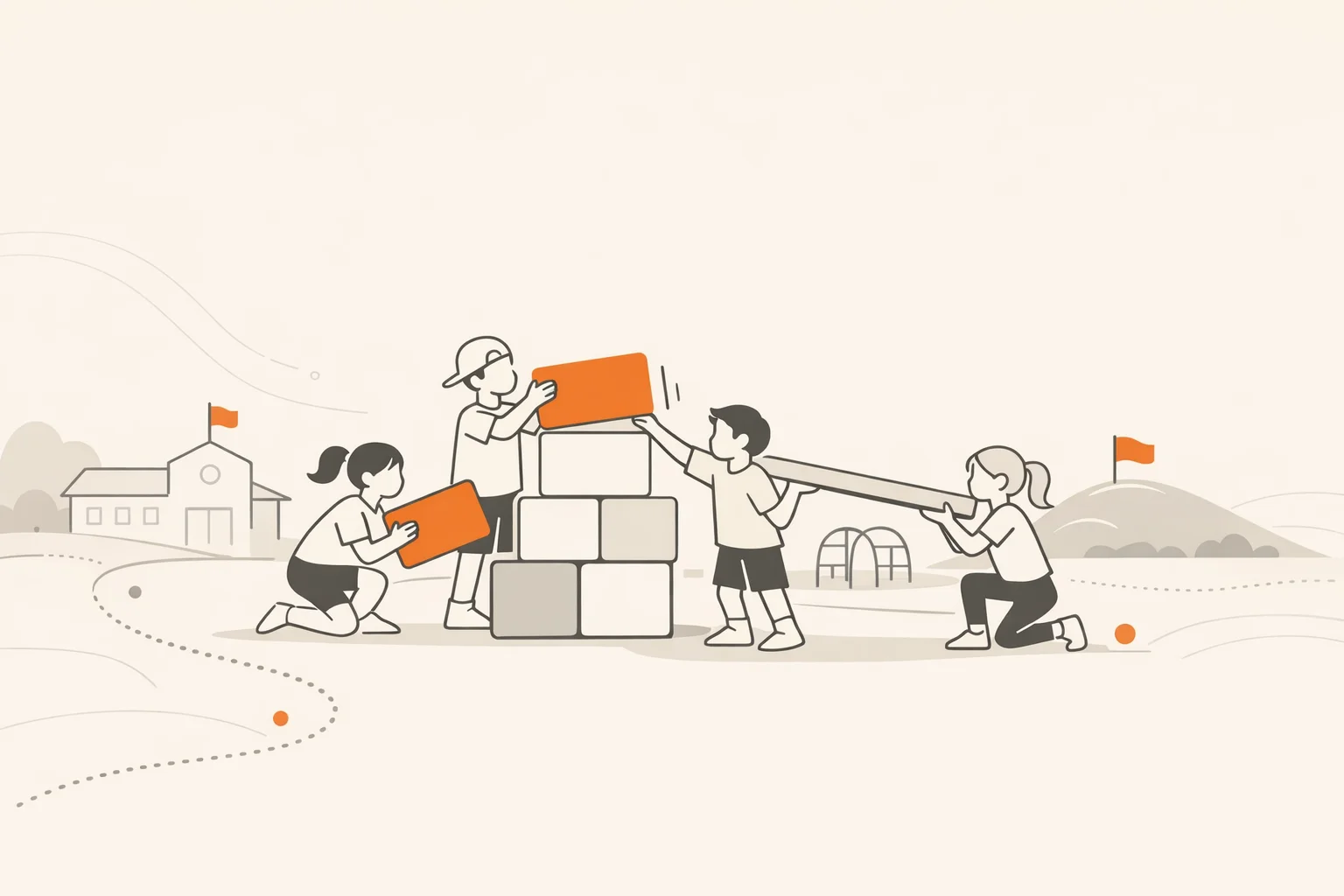
Team building with kids is equal parts structure and play. The structure guarantees every student knows what to do, how to win, and how to help. The play keeps energy high and makes the skills stick. What follows is a field-tested list of 25 activities for kids in school that build collaboration without forcing it. Each one includes quick setup notes, timing guidance, and simple ways to scale for age, space, and noise tolerance.
Two quick guideposts before we start. First, movement helps attention. The CDC recommends about 60 minutes of daily activity for ages 6 to 17, which your day can chip away at in short bursts. CDC school-age activity guidance. (cdc.gov) Second, unstructured play and guided play both build executive function and social skills, which is exactly what the best team activities sneak in. AAP clinical report on the power of play. (publications.aap.org)
Start with the outcome you want. Need a calm reset before a test block? Choose a low-noise, short-rotation game. Want cross-grade connection at recess? Go big, visible, and silly. Designing for mixed abilities? Offer multiple paths and visible roles so no single skill decides the whole game. The CAST Universal Design for Learning guidelines are a solid lens for creating flexible options for all learners. CAST overview of UDL. (cast.org)
Nobody quits a game they are winning. Your first 60 seconds should guarantee a win.
Builds: collaboration, observation, light movement
Best for: hallways, gym, playground, or a classroom loop
Time: 10 to 25 minutes
Group size: Pairs to groups of 6
Materials: Printed clues or posted QR codes
How it works: Create 6 to 10 short stations around your space. Each station asks a team to snap a photo, answer a trivia prompt, or complete a micro-task before moving on.
Make it easier: Keep all stations independent so teams can start anywhere and never queue.
Make it tougher: Add two “team-up” stations where two groups must meet to complete a joint task.
Debrief prompt: Which role helped your team the most today, and why?
Pro move: If you want the logistics handled for you, a purpose-built scavenger hunt app automates points, photo capture, and leaderboards while letting you run in a browser or on phones.
Builds: planning, fine motor teamwork, patience
Best for: gym, cafeteria, outdoor table
Time: 8 to 15 minutes
Group size: Teams of 4 to 6
Materials: Plastic cups, table
How it works: Teams shuttle cups one at a time to build a stable pyramid, then deconstruct it and return the cups. Rotate who builds, who runs, and who stabilizes.
Make it easier: Allow two hands on the stack at once.
Make it tougher: Add a communication rule like whisper-only or nonverbal for one round.
Debrief prompt: What plan changed after your first attempt, and what improved?
Builds: engineering mindset, iteration, role clarity
Best for: classroom tables
Time: 20 to 30 minutes
Group size: 3 to 5
Materials: Paper, tape, 10–20 craft sticks or straws, a small weight
How it works: Design and build a bridge that spans a textbook gap and holds a weight. Give explicit rotating roles like designer, builder, tester, reporter.
Make it easier: Provide one sample structure photo as inspiration.
Make it tougher: Limit tape or introduce a “budget” and material pricing.
Debrief prompt: Which constraint forced your most creative idea?
Builds: communication, flexibility, leadership by invitation
Best for: open space indoors or out
Time: 10 to 15 minutes
Group size: 6 to 10
Materials: None
How it works: Classic knot, but layer one twist: only two people can speak during the first two minutes. Then open the floor.
Make it easier: Allow a one-time hand release if needed to keep momentum.
Make it tougher: Time-box the untangle and run two heats.
Debrief prompt: When fewer people talked, what changed for the team?
Builds: nonverbal communication, empathy, perspective taking
Best for: hallway or gym line
Time: 5 to 10 minutes
Group size: Any size, split into two lines for speed
Materials: Prompt card
How it works: Without speaking, line up by birthday month, shoe size, or number of letters in your first name. Hands and faces do most of the talking.
Make it easier: Use visual cards with months or numbers.
Make it tougher: Combine two variables, like birth month and day.
Debrief prompt: How did you include someone who looked unsure?
Builds: creativity, listening, building on ideas
Best for: classroom tables
Time: 10 to 20 minutes
Group size: 3 to 6
Materials: Story dice or prompt cards
How it works: Roll 3 to 6 images. In turn, each student adds one sentence that must include one image. End with a title and a 30-second performance.
Make it easier: Use sentence starters on a whiteboard.
Make it tougher: Add a genre constraint like mystery or sci-fi.
Debrief prompt: What made it easier to build on someone else’s idea?
Builds: cooperation, problem solving, body awareness
Best for: open space
Time: 5 to 12 minutes
Group size: 8 to 12 in a circle
Materials: One or two hula hoops
How it works: Holding hands, pass the hoop around the circle without letting go. Add a second hoop moving the opposite direction for chaos and laughter.
Make it easier: Shorten the circle size.
Make it tougher: One silent round.
Debrief prompt: Where did the group naturally slow down and why?
Builds: focus, shared responsibility, joyful movement
Best for: gym or stage
Time: 8 to 12 minutes
Group size: 4 to 8 per team
Materials: Balloons or beach balls
How it works: Keep two to four balloons in the air. Everyone must touch the balloon before it can be hit again. Count consecutive hits.
Make it easier: One balloon per team.
Make it tougher: Add a no-hands round.
Debrief prompt: Who quietly saved the round more than once?
Builds: interteam collaboration, negotiation, planning
Best for: classroom tables
Time: 15 to 25 minutes
Group size: 3 to 5 per team
Materials: Two or three jigsaw puzzles with pieces mixed across boxes
How it works: Teams race to complete their puzzle, but each is missing pieces that other teams hold. Trading is allowed. No running, no yelling.
Make it easier: Announce how many pieces each team is missing.
Make it tougher: Add a “currency” like tokens to negotiate trades.
Debrief prompt: How did you earn a trade when the other team didn’t need yours?
Builds: iteration, stability under pressure
Best for: classroom tables
Time: 12 to 20 minutes
Group size: 2 to 4
Materials: Spaghetti, tape, string, one marshmallow
How it works: Build the tallest free-standing tower that holds the marshmallow on top. Pause at halfway to force a quick redesign moment.
Make it easier: Offer a stability tip like tripod bases.
Make it tougher: Restrict tape length or require a cantilever.
Debrief prompt: What did you stop doing that made the design better?
Builds: spatial reasoning, leadership turns, consensus
Best for: open space
Time: 8 to 15 minutes
Group size: 6 to 10
Materials: Long rope tied in a loop
How it works: With eyes closed, the team forms a square, triangle, or star using the rope. One player can peek for 5 seconds halfway through to advise.
Make it easier: Start with a triangle.
Make it tougher: Add time pressure or no-peek rule.
Debrief prompt: Which instructions actually helped change the shape?
Builds: trust, clear directions, careful listening
Best for: gym or playground
Time: 10 to 20 minutes
Group size: Pairs
Materials: Cones or soft obstacles, blindfolds if appropriate
How it works: One partner is the guide, one the traveler. Navigate a short obstacle field with verbal-only cues. Switch roles and tighten the course.
Make it easier: Use taped floor shapes instead of objects.
Make it tougher: Add forbidden words the guide cannot use.
Debrief prompt: What made your instructions easy to follow?
Builds: strategy, teamwork, restraint
Best for: field or blacktop
Time: 15 to 30 minutes
Group size: 10 to 30 split into two teams
Materials: 10 to 20 cones for each side
How it works: Classic capture the flag, but with multiple small “flags.” Teams earn a point for each cone carried home. Tagging sends players to a quick 10-count before returning.
Make it easier: Shrink the field.
Make it tougher: Add two protected zones and one wild-card cone worth triple points.
Debrief prompt: What did your team do to avoid bunching up?
Builds: sequencing, narrative, collaborative editing
Best for: campus walk or classroom if devices allowed
Time: 20 to 30 minutes
Group size: 3 to 5
Materials: Phones or tablets if permitted, otherwise draw frames
How it works: Teams shoot 5 photos that tell a story with a start, middle, twist, and ending. Print or sketch frames and present in 60 seconds.
Make it easier: Provide a theme like “a lost lunchbox.”
Make it tougher: Require a forced perspective shot.
Debrief prompt: Which photo carried the story most, and why?
Builds: process design, resource sharing, kindness under pressure
Best for: tables or floor space
Time: 12 to 18 minutes
Group size: 3 to 6
Materials: Paper, scissors, limited tape
How it works: Longest paper chain wins, but each team is missing one material. Set a shared store in the middle staffed by a rotating student. Collaboration beats hoarding.
Make it easier: Remove the store and give complete kits.
Make it tougher: Introduce random “supply delays” for 30 seconds.
Debrief prompt: What behavior turned rivals into allies?
Builds: basic coordinates, inference, team roles
Best for: chalkable outdoor area or taped classroom floor
Time: 10 to 20 minutes
Group size: Teams of 3 to 5
Materials: Chalk or tape, tokens
How it works: Draw a grid with hidden “treasures” only the teacher sees. Teams ask yes-no questions to narrow locations and place tokens collaboratively.
Make it easier: Reveal one free coordinate.
Make it tougher: Limit questions per round.
Debrief prompt: Which question gave you the biggest leap?
Builds: creativity, consensus, rule clarity
Best for: classroom or playground
Time: 20 to 30 minutes
Group size: 4 to 6
Materials: Anything on hand
How it works: Teams invent a 5-minute game anyone can learn in 30 seconds. They write the rules, run a playtest, then swap games with another team.
Make it easier: Provide a starter constraint like “uses 3 cones.”
Make it tougher: Require two roles and a scoring system.
Debrief prompt: What rule confused players and how did you fix it?
Builds: shared vision, turn-taking, visual communication
Best for: hallway paper roll
Time: 15 to 30 minutes
Group size: Whole class in rotating trios
Materials: Butcher paper, markers or paint if appropriate
How it works: Post a wide prompt like “What makes our class work.” Students add in short shifts, responding to what’s already there. Finish with 60-second gallery walks.
Make it easier: Provide a few anchor shapes to color and extend.
Make it tougher: Add a rule that every new addition must connect to two existing elements.
Debrief prompt: Where did a small idea spark a bigger one?
Builds: vocabulary, inference, teamwork
Best for: classroom tables
Time: 10 to 20 minutes
Group size: 4 to 6
Materials: Word cards created from current units
How it works: One clue-giver connects two or three terms with a single hint. Teammates confer and guess. Rotate roles quickly.
Make it easier: Use high-frequency words with images.
Make it tougher: Add a “ban list” of obvious linking words.
Debrief prompt: How did you decide which guess to keep or drop?
Builds: rhythm, coordination, co-creation
Best for: any open space
Time: 8 to 12 minutes
Group size: Pairs, then merge into quads
Materials: None
How it works: Partners create a 5-step handshake. Pairs teach pairs until half the room knows the same pattern. End with a synchronized run.
Make it easier: Provide a 3-step starter.
Make it tougher: Add a sound effect per step.
Debrief prompt: What teaching move helped others learn it fast?
Builds: nature noticing, teamwork, stewardship
Best for: school grounds
Time: 15 to 30 minutes
Group size: 3 to 5
Materials: Reference cards, clipboards
How it works: Teams find living and nonliving items from an age-appropriate list. Add quick sketches or photos where permitted.
Make it easier: Keep the search zone small and obvious.
Make it tougher: Require evidence of relationships like pollinator to flower.
Debrief prompt: What surprised you about our campus ecosystem?
Builds: focus, turn-taking, nonverbal leadership
Best for: classroom circle
Time: 6 to 12 minutes
Group size: 8 to 20
Materials: None
How it works: One student starts a simple clap-stomp pattern. The next adds a beat. Continue until the circle performs the full sequence together.
Make it easier: Keep to claps and snaps.
Make it tougher: Add body percussion or small instruments.
Debrief prompt: What helped the whole circle sync up?
Builds: sportsmanship, community, joyful noise
Best for: open space
Time: 8 to 15 minutes
Group size: Whole class
Materials: None
How it works: Play rock-paper-scissors. Winners pair up with winners. Losers become their cheer squad. Repeat until two giant groups face off with maximum cheering.
Make it easier: Stop when you have a top eight.
Make it tougher: Add rock-paper-scissors-lizard-Spock.
Debrief prompt: What made losing still feel like participating?
Builds: physics intuition, technique, coordinated pull
Best for: field
Time: 10 to 20 minutes
Group size: Two teams of 6 to 10
Materials: Sturdy rope or looped bands
How it works: Practice stance, foot placement, leaning, and timing before a short best-of-three. Frame it as a strategy lab, not a strength contest.
Make it easier: Use multiple shorter ropes with small groups in parallel.
Make it tougher: Require a call-and-response cadence for pulls.
Debrief prompt: Which technique beat raw power today?
Builds: negotiation, math in context, planning
Best for: tables
Time: 20 to 30 minutes
Group size: 3 to 5
Materials: Mixed supplies and a simple token economy
How it works: Assign prices to materials. Give each team a budget. They design, buy, and build a tower to meet height and stability criteria.
Make it easier: Provide a sample invoice.
Make it tougher: Add a surprise tax or sale mid-build.
Debrief prompt: What trade-off got you closest to the goal?
A quick word on evidence. Collaborative learning has positive effects when structure and accountability are clear, and it is most reliable when students know exactly how to contribute. EEF evidence summary on collaborative learning. (educationendowmentfoundation.org.uk)
Design for a range of abilities. Offer multiple ways to show skill, vary movement demands, and keep the instructions concise and repeatable. The Universal Design for Learning frame is built for exactly this kind of flexible planning across ages and contexts. CAST on UDL. (cast.org)
Scavenger hunts hit a sweet spot for schools. They mix movement, problem solving, and storytelling in a way that feels like play but quietly teaches kids to coordinate. If you want a ready-to-run set, start here and adjust points by age.
If you’d rather not manage photos, points, and leaderboards manually, Scavify runs hunts in a browser or on phones and automates the busywork while you handle the fun parts.
How long should a team activity last in class time
Short is your friend. Most of the activities above fit inside 10 to 20 minutes, including setup and a one-question debrief. Keep a few 5-minute options for transitions and a few 25-minute options for deeper work.
What’s a good activity for kids in school when space is tight
Silent line up, pass the rhythm, story dice, and codewords all run in tight quarters. Use table teams and rotate quickly so everyone gets a turn without moving desks.
How do I adapt for mixed ages or abilities without calling attention to differences
Offer multiple roles and paths to contribute, and let teams choose. The UDL mindset helps here: vary representation, expression, and engagement so students can access the goal in more than one way. CAST on UDL. (cast.org)
What if I only have five minutes between lessons
Run hula hoop pass, pass the rhythm, or a one-round balloon keep-up. The goal is a quick mood reset and one small win before the next block.
How do I keep kids from sitting out or letting the same voices lead
Name roles and rotate them on a timer. Use talk tokens for discussions. Design scoring so encouragement, accuracy checks, and documentation all earn points, not just speed.
Are competitive games OK for building teamwork
Yes, when the task requires interdependence. Frame the challenge so no single player can win it alone, and spotlight collaborative behaviors in scoring. Evidence summaries show collaborative learning works best with structure and accountability. EEF overview. (educationendowmentfoundation.org.uk)
How do these activities support SEL without adding a whole new curriculum
They exercise relationship skills, self-management, social awareness, and responsible decision-making in authentic moments. That aligns directly with the CASEL framework. CASEL’s SEL competencies. (casel.org)
What about movement goals during the school day
Micro-bursts add up. Those 5 to 15 minute activities help chip away at the recommended daily movement target for ages 6 to 17. CDC guidance. (cdc.gov)
Good team activities do three things at once. They get everyone moving a little, make success visible early, and end with a quick reflection. When those are in place, you’ll see stronger collaboration show up in lessons, projects, and even line transitions. That’s the quiet magic of well-designed play in school.