Solutions
Your first hunt, live this afternoon.
Free to start · No download for participants
Use remote team building activities to create real participation, with instructions, timing, group-size guidance, low-prep options, and facilitator tips.
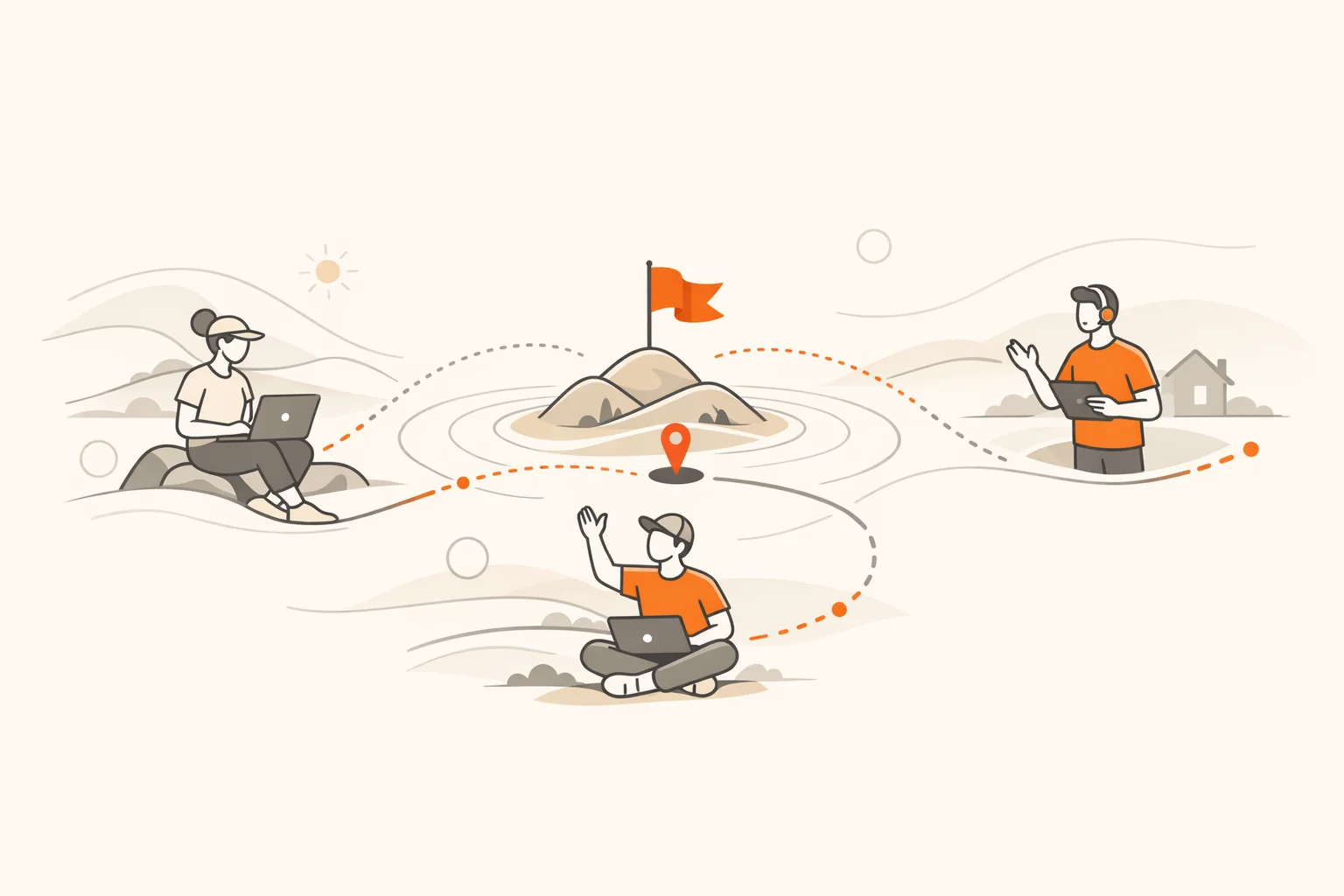
Remote teams don’t magically connect on a video grid. They connect when the activity is clear, the time is tight, and the win is visible. That’s the difference between an awkward call and a session people want to repeat.
In our experience, most remote activities fall flat for three reasons: fuzzy instructions, open‑ended timing, and no shared scoreboard. Fix those, and participation jumps. The ideas below are built to be simple to launch, easy to facilitate, and flexible across time zones.
You’ll find 33 field‑tested activities with why they work, how to run them, timing guidance, prep notes, and facilitation tips. Mix live and async. Keep the energy honest. Retire anything that starts to feel like homework.
Strong remote activities create connection on purpose, not by accident. Research keeps pointing to two drivers: psychological safety and consistent rituals. Workers who experience higher psychological safety report a stronger sense of belonging, which supports healthier collaboration. You don’t buy belonging; you build it with repeatable moments where everyone has a role and a fair shot to contribute. See the American Psychological Association’s overview on connection and psychological safety for practical context in modern workplaces, not just theory (fostering connection). (apa.org)
It’s also worth being precise about “loneliness.” Remote work isn’t a switch that turns loneliness on or off. Large‑scale analyses show the picture is mixed and depends on the quality of social opportunities. That means better rituals beat mandatory calendar clutter. For balanced perspective, see the 2024–2026 reporting from Gallup on engagement and loneliness and recent peer‑reviewed work on remote work and isolation (Gallup release; engagement update; Science article on remote work and isolation). (gallup.com)
Pick for fit, not novelty. Use this quick filter:
Design for momentum, not magic. The room comes alive when the next step is obvious.
Why it works: Fast, personal context beats small talk. People remember objects and stories.
How to run: Everyone has 60–90 seconds to show a meaningful item within arm’s reach and share one sentence about it. Use a facilitator to keep pace and pass the mic in chat order.
Time: Under 10 minutes for a small team; scale by running parallel rooms.
Group size: Any; use breakout rooms above 12.
Prep: None.
Tool tip: Zoom breakout basics from Cornell’s teaching center are a solid primer for smooth room setup (Zoom breakout room tips). (teaching.cornell.edu)
Why it works: Turns the home office into shared material. Zero prep for participants.
How to run: Screen‑share a 5x5 grid of everyday items (mug, plant, sticky note, something orange). Players hold items to camera; first to a row calls “Bingo.”
Time: 10–15 minutes.
Group size: 6 to 200; auto‑assign breakout rooms for heats.
Prep: Build one slide.
Tool tip: FigJam and Miro have ready icebreaker templates you can adapt fast (FigJam icebreakers; Miro icebreaker templates). (figma.com)
Why it works: A hunt replaces passive time with a stream of clear, bite‑size wins on a live leaderboard. Photo, video, trivia, and QR tasks give different personalities different ways to shine.
How to run: Launch a 20–30 minute hunt with a balanced set of quick challenges. Let people play in the mobile app or browser. End with a highlight reel and a few shout‑outs.
Time: 20–30 minutes live; or run async over a day.
Group size: 5 to 500+.
Prep: Light; choose challenges from a template pack.
Tool tip: A modern scavenger hunt app helps with automation, scoring, media collection, and browser + app flexibility for hybrid teams. In our world, fewer tabs means more participation.
Why it works: Time‑zone empathy defuses friction. Seeing each other’s constraints builds trust.
How to run: Everyone marks their local start time, focus blocks, and caregiving windows on a shared board. Capture two norms the team will honor for the next sprint.
Time: 20 minutes.
Group size: 6 to 20.
Prep: One shared canvas.
Reference: Atlassian’s Team Playbook has practical plays for rituals and working agreements you can borrow wholesale (working agreements; remote teamwork plays). (wac-cdn.atlassian.com)
Why it works: Constraints unlock creativity. Six words surface identity without oversharing.
How to run: Prompt: “How did you get here?” Share in chat. Invite 2–3 quick elaborations.
Time: 8–12 minutes.
Group size: Any.
Prep: None.
Why it works: Movement changes tone and energy. People open up when they’re not staring at a grid.
How to run: Auto‑pair teammates for 15‑minute audio‑only walks with one question: “What’s something recent you learned the hard way?”
Time: 15 minutes.
Group size: Any.
Prep: Calendar pairs; encourage phone earbuds over laptop mics.
Health note: Light movement aligns with global physical‑activity guidance; even short bouts matter (WHO guidelines). (who.int)
Why it works: Forces precise language and active listening.
How to run: In trios, one designer sees a simple shape layout, one builder moves shapes on a whiteboard, one messenger relays instructions without screensharing. Rotate roles.
Time: 20 minutes.
Group size: 6 to 24.
Prep: Upload a few target boards.
Why it works: Quick windows into each other’s worlds create context and empathy.
How to run: Spin a wheel with names. Three people give a 60‑second video tour of one corner of their space.
Time: 10 minutes.
Group size: Any.
Prep: None.
Why it works: Playful curiosity, low risk.
How to run: Collect one childhood or travel photo per person. Shuffle and reveal; group guesses the owner in chat. Give each photo a 20‑second story.
Time: 15–25 minutes.
Group size: 6 to 40.
Prep: Collect photos in advance or live DM to host.
Why it works: Creates honest tone checks without long updates.
How to run: Everyone posts three emojis for mood, energy, and focus. Two volunteers share one sentence on why.
Time: 5 minutes.
Group size: Any.
Prep: None.
Why it works: Food stories connect across roles and regions.
How to run: Build a living doc with 10‑minute lightning demos over a month. Each session ends with a photo of the dish or ingredient.
Time: Async plus 10 minutes weekly.
Group size: Any.
Prep: Template page.
Why it works: Cooperation under light pressure reveals team habits.
How to run: Drop a two‑puzzle pack into breakout rooms. Make each solvable in under 7 minutes. Reconvene for a 3‑minute debrief per room.
Time: 20–25 minutes.
Group size: 8 to 60.
Prep: Curate 1–2 logic puzzles per room.
Facilitation tip: Practice breakout logistics; small details reduce friction (Zoom’s managing breakout rooms). (support.zoom.com)
Why it works: Recognition builds glue; trivia adds game tension.
How to run: Mix 50 percent fun company context with 50 percent pop culture. Keep rounds short with visible scores.
Time: 20 minutes.
Group size: 6 to 200.
Prep: One slide deck.
Why it works: Normalizes lightweight feedback and appreciative language.
How to run: In pairs, practice a two‑line format: “I noticed X. It helped me Y.” Rotate twice.
Time: 12–18 minutes.
Group size: Any.
Prep: None.
Why it works: Keeps social threads alive asynchronously.
How to run: One teammate posts a prompt every Friday, tags the next host. Collect the best answers in a living doc.
Time: Async; 2–3 minutes per person.
Group size: Any.
Prep: Starter list of 10 prompts.
Why it works: A harmless dose of silliness resets mood.
How to run: Pair up. Each person uses props to create a quick animal illusion on camera. Screen‑capture the best ones for an album.
Time: 10 minutes.
Group size: Any.
Prep: None.
Why it works: Turns gripes into better ways of working.
How to run: Pick a small, annoying process. In breakout trios, sketch a lighter version. Share one upgrade each and commit to a one‑week trial.
Time: 25–30 minutes.
Group size: 6 to 24.
Prep: One canvas with the current steps.
Reference: Atlassian’s plays for ritual resets and team posters are a useful backbone for documenting decisions (ritual reset; team poster). (atlassian.com)
Why it works: Regular recognition beats sporadic applause.
How to run: In 8 minutes, gather three wins, two learnings, one thank‑you. Someone screenshots the chat for a rolling highlight doc.
Time: 8–10 minutes.
Group size: Any.
Prep: None.
Why it works: Quick deduction games build collaborative reasoning.
How to run: Share a short whodunit. Give teams 6 minutes to ask yes/no questions, 3 minutes to present a theory. Reveal and debrief what helped.
Time: 10–15 minutes.
Group size: 6 to 50.
Prep: Pick a suitable mystery.
Why it works: Knowledge sharing in human‑sized bites.
How to run: Four teammates each show a tool or shortcut in 2 minutes. No slides allowed.
Time: 10 minutes.
Group size: Any.
Prep: Speakers volunteer in advance.
Why it works: Keeps participation open across time zones.
How to run: Post a daily theme for a week: “circles,” “morning window,” “small delight.” React with emoji only.
Time: Async.
Group size: Any.
Prep: List of themes.
Why it works: Simple, inclusive movement boosts mood and focus.
How to run: Pick one habit for a week: 10‑minute walk, 5 stretches, water check‑ins. Celebrate consistency, not distance or speed.
Time: Async; 2 minutes daily.
Group size: Any.
Prep: Quick tracker.
Reference: Global guidance encourages regular moderate movement across the week; short bouts count (WHO physical activity guidance). (who.int)
Why it works: Cross‑pollinates skills and relationships.
How to run: Three 7‑minute rounds. Mentees bring a question; mentors offer one next step and a resource. Swap roles next month.
Time: 25 minutes.
Group size: 8 to 30.
Prep: Simple pairing grid.
Why it works: Appreciation lands best when it’s specific and fast.
How to run: In a circle, thank one person for a concrete action in the last week. Keep it moving.
Time: 7–12 minutes.
Group size: Any.
Prep: None.
Why it works: Shared purpose bonds teams.
How to run: Pick a recurring, impact‑per‑minute task your team can do from anywhere. Time‑box one hour monthly and share quick reflections.
Time: 60 minutes.
Group size: Any.
Prep: Identify a partner activity.
Why it works: Music is culture shorthand.
How to run: One person curates a 30‑minute playlist for a focused work sprint; team listens together, cameras off, then shares one takeaway.
Time: 40 minutes including share‑out.
Group size: Any.
Prep: Curator volunteers.
Why it works: Identity beyond the job title.
How to run: 3‑minute demos of non‑work skills. Cap attendance per session to keep it cozy.
Time: 30–45 minutes.
Group size: 6 to 15 per room.
Prep: Volunteer list.
Why it works: Friendly competition + useful outcomes.
How to run: 48‑hour async idea sprint: submit a 60‑second video + 6‑line summary. Panel picks two to pilot.
Time: Two days async; 20‑minute reveal.
Group size: Any.
Prep: Submission form.
Why it works: Captures momentum and milestones.
How to run: Each person adds one artifact (screenshot, photo, sentence) to a folder today and a note to future selves. Reopen in six months.
Time: 10 minutes now; revisit later.
Group size: Any.
Prep: Shared folder.
Why it works: Geography becomes an asset, not a blocker.
How to run: Everyone shares a one‑photo “postcard” and two lines about their city or neighborhood. Compile into a lightweight team atlas.
Time: 10–15 minutes.
Group size: Any.
Prep: None.
Why it works: Quick drawing compresses communication.
How to run: Use a shared canvas. Rotate drawers every 30 seconds. Score by team.
Time: 10–15 minutes.
Group size: 6 to 30.
Prep: Word list.
Why it works: Regular serendipity for distributed teams.
How to run: Auto‑pair people for 15‑minute coffees every other week. Provide two prompts to dodge small talk.
Time: 15 minutes per pairing.
Group size: Any.
Prep: Set and forget the pairing bot or rotation.
Reference: GitLab documents how informal communication programs like coffee chats strengthen remote culture; steal their patterns and scale them to your context (GitLab informal communication). (handbook.gitlab.com)
Why it works: Collaboration that leaves a useful artifact.
How to run: Pick a common, fuzzy process. In 15 minutes, teams draft a bare‑minimum runbook. Vote on the clearest version and publish.
Time: 20–25 minutes.
Group size: 6 to 24.
Prep: Template with headings.
Skip the 20‑question post‑event form. Use two pulses before and after a series: “I feel connected to my teammates,” and “Communication on my team is effective.” Watch the delta and read the comments. If you want a broader benchmark on what matters to modern knowledge workers, Microsoft’s 2024 Work Trend Index is a helpful backdrop to calibrate expectations about collaboration time and cognitive load (2024 Work Trend Index). (microsoft.com)
Clarity, brevity, and visible progress. Everyone should know exactly what to do next, the clock should be visible, and there should be an artifact or score at the end. Psychological safety helps; APA highlights that belonging tracks with safety in modern workplaces (APA on fostering connection). (apa.org)
Favor async threads (photo prompts, question‑of‑the‑week) and short live sessions at rotating times. Document outcomes in a single place so those asleep aren’t penalized. Atlassian’s plays on team posters and working agreements help teams codify these norms (team poster; working agreements). (wac-cdn.atlassian.com)
Short is kind. Most live formats land between 10 and 30 minutes. Longer formats work best when they produce something the team reuses, like a runbook or process sketch.
Pick formats that don’t depend on faces: hunts with photo uploads, async albums, text‑based games, or lightning demos with shared screens. Keep opt‑in for video moments.
Yes, when they’re tied to working norms and repeated. Gallup’s recent reporting connects better social opportunities and clarity of expectations with higher engagement; the right rituals make those concrete (engagement update). (gallup.com)
Micro‑habits over competitions. Light daily movement or stretch prompts with recognition for consistency, not performance, align with WHO guidance (WHO guidelines). (who.int)
Remote team building doesn’t need spectacle. It needs structure, honest energy, and a finish line people can see. When you get that right, participation stops being a chore and starts feeling like momentum.