Solutions
Your first hunt, live this afternoon.
Free to start · No download for participants
Use get to know your coworkers game to create real participation, with instructions, timing, group-size guidance, low-prep options, and facilitator tips.
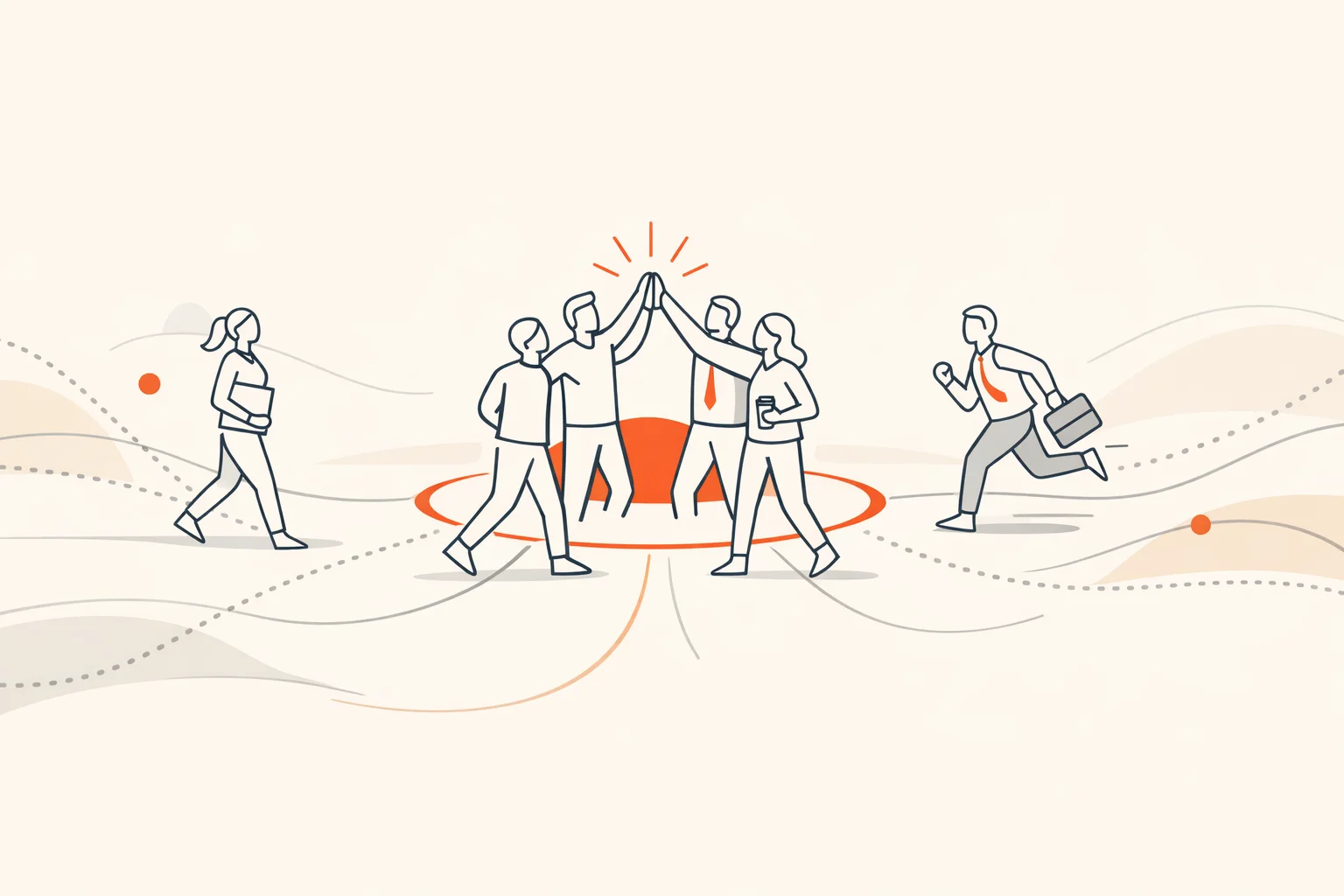
Cohesive teams rarely happen by accident. They form when people get just enough structured chances to meet, talk, try things together, and see each other beyond titles. The good news: you don’t need a retreat or a trust fall to make that happen. You need a steady drumbeat of simple, well-run activities that make introductions easy and conversation natural.
This guide gives you 35 get-to-know-your-coworkers games that actually work. Each one includes purpose, rough timing, group-size guidance, setup notes, and facilitation moves. Mix a few into your meetings, onboarding, offsites, and standups. Keep what sparks real conversation. Retire what doesn’t. Repeat.
One quick note on tools: tech can help. If you want to turn social discovery into a shared experience with points, photos, GPS check-ins, and live leaderboards, a purpose-built scavenger hunt app makes coordination painless across offices, time zones, and devices.
Healthy teams share two patterns: people feel safe speaking up and they interact in lively, respectful bursts. Research on psychological safety and communication patterns backs this up. High-trust environments correlate with better performance, and teams with healthy back-and-forth tend to out-execute those without it. See the overview on psychological safety in Harvard Business Review and Gallup’s large-scale engagement meta-analyses connecting engagement to outcomes like productivity and profitability. Also useful: work on communication dynamics from MIT’s Human Dynamics group. (hbr.org)
Nobody quits a game they’re winning. Start with a guaranteed win.
Purpose: Quick, low-pressure intros that spark smiles and surface commonalities.
Time: About 5 minutes for small groups; add a few more for larger rooms.
Group size: Any; run in circles of 5–8 for flow.
How it works: In a circle, each person answers one playful prompt in under 15 seconds. Rotate prompts each round.
Facilitator tip: Model a crisp answer first. Keep the pace snappy.
Good prompts: “Best small purchase this year,” “A food hill you’ll die on,” “A tiny work habit you’re proud of.”
Purpose: Find surprising overlaps fast.
Time: 8 to 12 minutes.
Group size: Tables or breakout rooms of 4–6.
How it works: Give teams 3 minutes to list the most oddly specific thing they all share, then share-out. Vote by applause.
Facilitator tip: Ban obvious traits like employer or department. Specific wins.
Purpose: Unlock stories without overexposing personal details.
Time: 10 to 15 minutes.
Group size: 4–6 per group, or gallery-style on video.
How it works: Ask people to grab or share a photo of an everyday object on their desk or in their bag. Tell its story in 60 seconds.
Remote twist: Screenshare or drop photos in chat.
Purpose: A fresh take on the classic.
Time: 10 minutes.
Group size: 6–10, multiple groups in parallel.
How it works: Two true statements, one plausible “twist” that’s a near‑miss. Group guesses the twist.
Facilitator tip: Offer categories to avoid TMI: travel, hobbies, skills, places lived.
Purpose: Fast, tactile, and low-tech.
Time: 12 to 18 minutes.
Group size: 3–5.
How it works: Hand out index cards or scrap paper. People draw 4 panels: origin, a proud moment, a current hobby, a future hope. Share in pairs, then one highlight to the group.
Prep: Paper and markers; that’s it.
Purpose: Round-the-room intros that don’t drag.
Time: 6 to 10 minutes.
Group size: Any; works especially well with 8–20.
How it works: Thumb = name/role; Index = one skill; Middle = something you’re learning; Ring = a value you protect at work; Pinky = a small joy.
Facilitator tip: Post the legend so people aren’t guessing.
Purpose: Light peek behind the curtain.
Time: 8 to 12 minutes.
Group size: 5–10.
How it works: People scroll to the 10th recent photo that’s shareable and tell the 30‑second story. Pass.
Remote twist: Drop thumbnails in chat.
Purpose: Emotional temperature without long monologues.
Time: 3 to 6 minutes.
Group size: Any; great opener.
How it works: Each person posts an emoji that fits their week and adds one sentence. Fast, human, done.
Facilitator tip: Model vulnerability at a level that feels safe for your culture.
Purpose: Loosen the room and deepen a single conversation.
Time: 12 to 20 minutes.
Group size: Pairs.
How it works: Head outside or lap the building. Give one prompt per lap. Swap partners once.
Accessibility: Offer seated pairs for anyone who prefers it.
Purpose: See differences and spark respectful debate.
Time: 10 to 15 minutes.
Group size: 8–25.
How it works: Tape a line on the floor (or use a virtual whiteboard). Read statements like “Mornings are my best work time” or “Meetings should default to 25 minutes.” People place themselves along the spectrum and explain.
Remote twist: Use reaction sliders or Miro/Mural cursors.
Purpose: Meet many people quickly without the cringe.
Time: 12 to 18 minutes.
Group size: Any size; plays best 20+.
How it works: Create a 4x4 card with work-style and hobby squares (“prefers async updates,” “makes bread,” “reads sci‑fi”). People sign each other’s squares. First to 4 in a row shares one story.
Facilitator tip: Limit one signature per person to spread conversations.
Purpose: Fast-moving opener that works in a lobby or large room.
Time: 8 to 12 minutes.
Group size: 20+.
How it works: Hand out a short list: “Find someone who joined this year,” “speaks two languages,” “can teach a keyboard shortcut.” Snap a selfie together as proof.
Variation: Make it department-specific for onboarding.
Purpose: Turn the office into a quick tour.
Time: 10 to 15 minutes.
Group size: Small groups of 3–5.
How it works: Groups get a map with 5 “hello points” to visit: IT help window, customer wall, prototype shelf, etc. At each point, meet a host and answer one simple question.
Remote twist: Hosts join a shared video room at set minutes.
Purpose: Hear how people think, not just what they do.
Time: 8 to 12 minutes.
Group size: 5–8.
How it works: One sentence to start. Each person adds one line, building toward a work-friendly theme like “shipping something tricky” or “helping a customer.” Keep it playful.
Purpose: Celebrate diverse paths.
Time: 10 to 15 minutes.
Group size: Any.
How it works: Post a world or region map. People add pins for where they grew up, studied, or had a formative job. Invite one sentence per pin.
Remote twist: Use a collaborative map or slide.
Purpose: Honest share that builds empathy.
Time: 8 to 12 minutes.
Group size: 4–8.
How it works: Each person shares one recent high and one low at work. Keep it brief and respectful. No fixing, just listening.
Facilitator tip: Go first and keep to one minute.
Purpose: Quick morale lift that feels real, not hokey.
Time: 10 to 15 minutes.
Group size: Tables of 5–7.
How it works: People rotate and share one specific appreciation focused on behavior or impact. Write them on sticky notes to take away.
Guardrails: Opt-out is fine. Keep it work-focused.
Purpose: Discover the person behind the role.
Time: 12 to 18 minutes.
Group size: 4–6.
How it works: Bring or share a photo of an artifact from a past job, team, or project. Tell how it shaped your approach today.
Remote twist: Screenshare with a 60-second cap.
Purpose: Bond by building together.
Time: 20 to 30 minutes.
Group size: 4–6.
How it works: Pick a small, real work friction (not politics). In 15 minutes, generate options, pick one, and plan a micro‑experiment.
Facilitator tip: Prioritize experiments you can try this week.
Purpose: Laughter plus insight.
Time: 12 to 18 minutes.
Group size: 4–8.
How it works: Ask, “How could we make onboarding terrible?” List answers. Flip each into a positive action. Share the funniest and the most useful.
Purpose: Make collaboration explicit.
Time: 15 to 25 minutes.
Group size: 3–6.
How it works: People fill a one-page template: “Best times to reach me,” “I appreciate when…,” “I’m working on…,” “Please nudge me if….” Share highlights.
Remote twist: Store in a shared folder for new teammates.
Purpose: Surface hidden talents.
Time: 12 to 20 minutes.
Group size: 6–12.
How it works: People write one thing they can teach in 15 minutes and one they want to learn. Match pairs. Book micro-sessions for later.
Facilitator tip: Keep the board up for a week.
Purpose: Light debate that reveals preferences.
Time: 10 to 15 minutes.
Group size: 6–12.
How it works: Draft picks from a themed list: “three tools on a deserted Wi‑Fi island,” “one superpower at work,” “one meeting rule to keep forever.” Short defenses only.
Purpose: Build confidence and curiosity.
Time: 15 to 30 minutes total.
Group size: 5–10 presenters.
How it works: Anyone volunteers for a strict 3‑minute talk on a non-work passion. Timer visible. Applause mandatory.
Remote twist: Use a countdown overlay or shared timer.
Purpose: Aspirations without oversharing.
Time: 8 to 12 minutes.
Group size: 4–8.
How it works: Write two things you hope to try in the next year. In pairs, trade lists and ask one follow-up question each.
Purpose: A fun, ongoing thread.
Time: 5 minutes kickoff, then async.
Group size: Any.
How it works: Create a team playlist. Each week one person adds 3 tracks tied to a theme. Others guess whose picks they were.
Purpose: Low-prep mood lifter for remote calls.
Time: 8 to 12 minutes.
Group size: 6–20.
How it works: Facilitator posts a theme (“weekend plans,” “project mood”). Everyone drops a GIF and narrates in one sentence. Quick laughs, light connection.
Purpose: Get people moving at home and sharing fast.
Time: 10 to 15 minutes.
Group size: 6–20.
How it works: Post 6 prompts: “a tool you use daily,” “a view you like,” “something that smells like coffee.” People upload quick snaps to a shared board and pick one to explain.
Variation: Award playful superlatives voted in chat.
Purpose: Keep connection alive between meetings.
Time: 2 minutes per person, async.
Group size: Any.
How it works: Post one question Mondays. People answer by Wednesday. Friday, the facilitator shares three highlights.
Good prompts: “A tiny hill you’ll die on,” “A tool you wish existed,” “An underrated coworker superpower.”
Purpose: Normalize appreciation.
Time: 5 minutes to start, then ongoing.
Group size: Any.
How it works: Create a dedicated channel. Each Friday, add one specific thank-you that names the behavior and impact. Keep it short and sincere.
Purpose: Serendipity without awkward invites.
Time: 5 minutes setup, 15-minute chats.
Group size: Any.
How it works: Roll virtual dice to pair people for short coffees. Add a prompt card to each pairing.
Remote twist: Use calendar holds with auto-matched pairs.
Purpose: Fast social discovery with a playful competitive edge.
Time: 12 to 18 minutes.
Group size: 12+ in an open space; works hybrid with on-site “runners” and remote “directors.”
How it works: Teams collect quick photos that prove micro-connections: “a teammate who bikes to work,” “someone who can whistle loudly,” “two people who share a hometown.” Live scoreboard optional.
Example challenge set:
If you want to automate scoring, photos, and leaderboards in minutes, Scavify’s browser-or-app flexibility keeps logistics simple without forcing downloads for everyone.
Purpose: Connect stories to what the org says it values.
Time: 15 to 25 minutes.
Group size: 4–8.
How it works: Give each group 3 values. They collect one short story from the room that shows each value in action. Share-out ends with one sentence on “what we do more of.”
Facilitator tip: Seed a couple of stories if the room is quiet.
Purpose: Co-create smarter ways of working.
Time: 20 to 30 minutes.
Group size: 4–8.
How it works: Post four prompts on a wall or board: “Decisions,” “Docs,” “Daily flow,” “Disagreements.” Groups rotate, adding one norm per stop. Publish the draft as the team’s living playbook.
Remote twist: Rotate through slides or boards.
Purpose: Create continuity people can feel.
Time: 15 to 20 minutes.
Group size: Any.
How it works: Ask each person to contribute one sentence: a gratitude, a prediction, a tip for the next hire. Seal it for next quarter’s team day.
Facilitator tip: Read five at random to close today’s session.
What’s the ideal length for a get-to-know-you game in a regular meeting?
Keep it short. Around 5 to 12 minutes lands well in routine meetings. Go longer only when you’ve cleared time and attention for it.
How often should we run these?
Light and regular beats rare and grand. A quick opener weekly plus one deeper activity monthly is a reliable cadence.
How do we avoid the cringe?
Explain the why in one sentence, make participation opt-in, and choose prompts that don’t overexpose people. Model the tone you want.
What about fully remote teams across time zones?
Favor async formats (question of the week, kudos thread) and rotate meeting times so the same people aren’t always inconvenienced. Keep video rounds short.
Any evidence this is worth the time?
Large-scale analyses link engagement and performance outcomes, and psychological safety is consistently tied to team learning and voice. Start small, measure sentiment and participation, then expand. See Gallup’s Q12 meta-analyses and HBR’s coverage of psychological safety. (gallup.com)
What if people don’t participate?
Drop the audience size. Start in pairs, then scale. Lower the time ask and pick prompts that reward quick answers. Invite, don’t force.
Can we combine games with onboarding or training?
Yes. Tie micro-hunts or desk tours to real tasks new hires must complete anyway. That’s where team-building moves from nice-to-have to useful.
Most teams don’t need louder icebreakers. They need small, repeatable moments where people feel comfortable speaking, curious about each other, and proud of a quick win. Pick two activities from this list and run them this month. Adjust, iterate, and keep what works. That’s how connection becomes part of how you operate, not just something you remember to do at offsites.