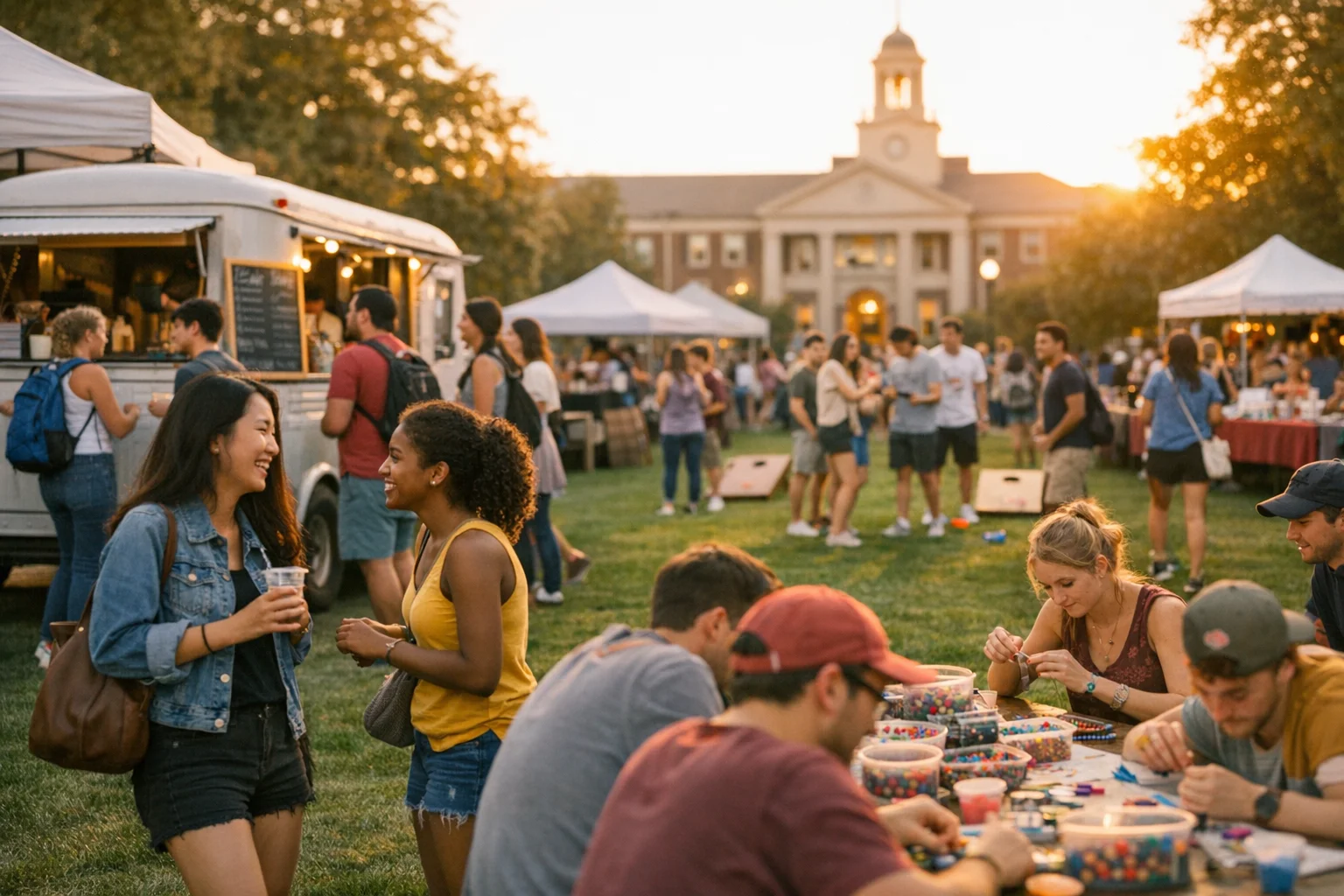
Students show up for experiences that feel immediate, social, and useful. They skip anything that smells like a lecture in disguise. Below are 68 college event ideas we’ve seen reliably fill rooms, quads, and Zoom grids, plus the programming patterns that make attendance repeatable rather than lucky.
At a Glance
- Plan for belonging, not butts in seats. Design events that help students connect with peers and staff in low‑pressure ways.
- Schedule for real student time. Lunchtime, late afternoon, and evening blocks beat early mornings for most undergrads.
- Lower friction. Visible locations, walk‑in formats, and clear “what you’ll get” copy increase turnout.
- Signal value. Food, supplies, and practical takeaways work; small nudges delivered at the right moment work even better.
- Measure and iterate. Track check‑ins and 7‑day follow‑up actions to learn what truly moved the needle.
What reliably drives turnout on today’s campuses
A pattern we keep seeing: attendance rises when events help students feel they belong, connect them to peers, and make support easy to access. Research continues to link student engagement and belonging with persistence and well‑being, reinforcing that your events aren’t fluff; they’re infrastructure for success. See the National Survey of Student Engagement’s conceptual framework on engagement and outcomes and a national perspective tying belonging to persistence. NSSE’s engagement primer and a peer‑reviewed national belonging analysis are useful anchors. (nsse.indiana.edu)
Timing matters more than most planners admit. Align events to student chronotypes and real energy windows; early mornings underperform for most undergrads. Evidence from cognitive chronotype research suggests later starts improve participation and performance. See this overview on aligning schedules to human time patterns. Frontiers in Human Neuroscience on chronotypes. (frontiersin.org)
Micro‑nudges help. Gentle, well‑timed prompts and default choices can increase the odds a student takes the small step that leads to attendance. For higher ed applications of behavioral design, the field toolkit here is practical. ideas42’s “Nudging for Success” report. (ideas42.org)
Food isn’t a panacea, but it’s a reliable accelerator. Recent higher‑ed polling found strong student and staff agreement that provided food increases connection and likelihood to attend. Use it intentionally, not as the only draw. University Business summary on food and engagement. (universitybusiness.com)
Campus activities organizations have synthesized this into a simple case: diverse, intentional programming builds belonging, which supports retention and persistence. NACA’s Case for Campus Activities overview. (naca.org)
How to program for attendance before you plan the event
- Co‑design with students. Let 3 to 5 student voices shape the concept and copy. Student language outperforms staff language almost every time.
- Place it where traffic already is. Quads, dining corridors, library lobbies, and residence‑hall commons beat tucked‑away rooms.
- Pick windows students can actually make. Lunchtime, late afternoon, and early evening blocks generally win. Avoid early mornings unless data says otherwise.
- Clarify the payoff. “Free pro headshots,” “15‑minute resume lab,” “build a custom tote,” “warm bao + study playlist.” Say the value plainly.
- Use layered invites. A nudged RSVP, a calendar hold, and a day‑of reminder do more than a single poster. Tie invites to simple actions. See nudge patterns summarized in this EAB webinar description on behavioral nudges. (eab.com)
- Track it. QR or app check‑ins let you see who shows and who returns. Push a 7‑day follow‑up with an easy next step.
Now, to the ideas.
Low‑lift pop‑ups students notice (8)
- Sidewalk Swap & Save: bring an item, take an item. Fast circulation, zero barrier.
- Five‑Minute Fix‑It Booth: button sewing, eyeglass screws, phone screen wipes, mini‑tool station.
- Mini Polaroid Studio: instant photos with a simple backdrop and props.
- Two‑Song Open Mic: short, rolling performances; easy walk‑in format.
- Sticker & Patch Bar: free designs, quick personalization for laptops and jackets.
- Speed‑Meet Tables: rotating conversation prompts; leave with one new contact.
- Study Playlist Exchange: submit a song, get a crowd‑sourced playlist link.
- Campus “Mythbusters” Table: bust common campus myths with quick facts and resources.
Food‑centered events that actually draw a line (7)
- Global Dumpling Night: student orgs fold, you steam; cultural notes on each filling.
- Late‑Night Breakfast Pop‑Up: pancakes between 9 and 11 pm during midterms.
- Farmers’ Market Grab‑Bag: partner with dining to pre‑bag produce for quick pickup.
- Food Truck Triple‑Header: three cuisines, one punch card for a small freebie.
- Spice Lab: taste‑and‑learn with heat levels, palate cleansers, and recipe cards.
- Zero‑Waste Picnic: compost tutorials, reusables station, and a leftovers swap.
- “Taste of Clubs” Tapas: each club serves a single bite that tells their story.
Hands‑on maker and creative sessions (6)
- Blind Contour Night: messy drawing warm‑ups and gallery walk.
- Custom Tote Screen‑Printing: 15‑minute rotations with a student print club.
- Tiny Zine Factory: fold, staple, share; display a zine wall afterward.
Mini Ceramics Glazing Bar: pre‑thrown bisque pieces, quick glazing, later pickup.
Upcycled Jewelry Bench: hardware store parts become wearables in 20 minutes.
Campus Landmark Sketch‑Crawl: meet‑ups at three photogenic spots.
Well‑being and mental health programming students trust (6)
- “Walk & Talk” Office Hours: counselors and peer listeners host walking loops.
- Quiet Craft + Tea: low‑stim room with simple crafts and warm drinks.
- Pet Pause: therapy animals with clear expectations and short lines.
- Sleep Reset Micro‑Workshops: 20 minutes on routines, light, and screens.
- Mindfulness in Motion: breathwork plus light stretching in outdoor shade.
- Mental Health Resource Scavenger Stroll: find five support touchpoints and check in.
Useful context if you need it for stakeholders: student‑led well‑being programs and events are widespread, with Active Minds providing toolkits and examples campuses adapt locally. Active Minds chapter resources. (activeminds.org)
Career, skills, and entrepreneurship that feel useful now (6)
- Pro Headshot Studio: ring lights, neutral backdrops, sign‑up slots, file delivery.
- 15‑Minute Resume Lab: drop‑in edits with trained peer coaches.
- LinkedIn Sprint: photo, headline, 3 bullets, 5 connections, done.
- Side‑Hustle Fair: student vendors with pop‑up booths and micro‑talks.
- “Ask Me Anything” with Recent Grads: candid Q&A on first‑year work reality.
- Salary Transparency 101: reading offers, benefits, and negotiating practice.
Community service and sustainability with visible impact (5)
- Pocket Park Clean & Plant: 90‑minute cleanup plus native plantings.
- Bike Repair Rally: tune‑ups, safety checks, and route planning.
- Thrift‑Flip Donation Drive: mend and upcycle station onsite.
- Mutual Aid Packing Party: hygiene or snack kits for a local partner.
- Energy‑Saver Swap: LED bulbs, smart strips, and quick demos in res halls.
Cultural, identity, and inclusion events that feel welcoming (6)
- Heritage Kitchen Stories: student‑led tastings with index cards of family history.
- Queer Craft Circle: make, chat, and resource sharing in a relaxed space.
- First‑Gen Wins Wall: write and post small victories; photo gallery later.
- Faith & Food Dialogues: facilitated meal conversations across traditions.
- Language Café: rotating tables by language with conversation starters.
- International Night Market: small booths for art, snacks, and performances.
Competitions, games, and campus challenges (including scavenger hunts) (6)
- Campus‑Wide Puzzle Drop: QR clues posted around high‑traffic areas for a week.
- 3x3 Basketball Under the Lights: short brackets, music, and MC.
- Speed Chess Ladder: 5‑minute matches, live bracket on a screen.
- Mini Esports Showdown: Mario Kart or Smash with short‑set rules.
- Dorm‑vs‑Dorm Trivia Cup: rounds rotate between history, memes, and campus lore.
- Scavenger Hunt Sprint: 60‑minute app‑based hunt connecting landmarks, resources, and inside jokes.
If you’re running a hunt, challenge variety and automation matter. Scavify supports photo, video, GPS check‑ins, QR codes, and quizzes in one flow, so students can play anywhere on campus with instant scoring and leaderboards. It’s browser or app based, quick to launch, and scales from 20 to 2,000 without breaking a sweat.
Sample challenge prompts that play well on campus:
- [Photo | 30 pts]: Recreate a famous campus statue’s pose with your crew.
- [Video | 50 pts]: Teach a 5‑second campus life hack in one take.
- [GPS Check‑in | 40 pts]: Where the campus started: check in at the oldest building.
- [QR Code | 25 pts]: Find the hidden code in the library’s quietest corner.
- [Q&A | 35 pts]: What year did our mascot first appear at a game?
Outdoor, adventure, and movement‑friendly options (5)
- Golden‑Hour Hike & Photo Tips: short trail, simple composition pointers.
- Lawn Games & Lo‑Fi DJ: cornhole, ladder toss, and a chill playlist.
- Rollerskating Night: pop‑up rink or indoor floor with gear rental.
- Sunrise Yoga for Night Owls: yes, start at 10 am when more will show.
- Bike‑to‑Brunch: slow roll ending at a campus‑adjacent café patio.
Residence‑hall and “close to home” micro‑events (4)
- Hallway Micro‑Arcade: mini retro consoles in the lounge for one evening.
- Laundry Room “Spin Cycle” Bingo: prizes drop as washers finish.
- Doorway Dessert Dash: roving dessert cart, quick conversations with RAs.
- 20‑Minute Plant Clinic: repotting, cuttings swap, and care cards.
Finals‑week support that reduces stress, not adds it (4)
- Study Hall with Services: tutors, writing help, and snacks in one room.
- Power‑Nap Pods: quiet space with timers and eye masks.
- Therapy Dogs + Tea: short lines, clear timing, and a calm zone.
- “Last Lecture” Shorts: 10‑minute faculty talks with one practical takeaway.
Digital and hybrid programming that still feels live (5)
- Discord Study Rooms: silent, discussion, and break channels with hosts.
- 25‑Minute Skill Sprints on Zoom: closed captions on, recording saved.
- TikTok‑Style Campus Tours: short clips stitched into a live watch party.
- Virtual “Meet the Orgs” Map: clickable booths with 1‑click interest forms.
- Mobile‑First Micro‑Challenges: weeklong streaks with tiny daily tasks and prizes.
Mobile‑delivered programming works when it’s designed for short, specific actions and gives organizers feedback loops. For context on mobile engagement as part of the student experience, see this overview. EDUCAUSE Review on engaging students with a mobile app. (er.educause.edu)
Make it measurable and repeatable
- Define the win. Pick a primary outcome: attendance count, repeat attendance, or specific follow‑up actions (e.g., tutoring sign‑ups 7 days later).
- Instrument lightly. Use QR or app check‑ins, a 1‑question pulse at exit, and a week‑later nudge with a clear next step.
- Tag each event by time, format, and incentive. Over a term, you’ll learn what slots and formats win on your campus.
- Build series, not one‑offs. Monthly rituals build habits and word of mouth.
- Keep co‑designing. In our experience, peer‑hosted, hands‑on, food‑adjacent, and walk‑in formats outperform. Start there, then tune to your campus.
If you need to justify the strategy upstream, you can connect the dots simply: intentional campus activities build belonging and engagement, which link to student success. Point leaders to synthesized cases and research overviews that make this case without drowning them in citations. NACA’s Case for Campus Activities and NSSE’s engagement framework do that well. (naca.org)
FAQs
What are the best times to host college events for attendance?
Late afternoons and evenings tend to outperform mornings for most undergrads. Lunchtime pop‑ups also work well in high‑traffic areas. Chronotype research suggests aligning timing with students’ natural energy patterns, not rigid schedules. Evidence on aligning schedules to human time patterns. (frontiersin.org)
Do students still attend virtual events?
Yes, when the format is short, specific, and interactive. Hybrid works best: short live segments, easy chat participation, and a clear “what you’ll get” outcome. Mobile‑first delivery helps because it meets students where they already are. EDUCAUSE overview on mobile engagement. (er.educause.edu)
How much does food actually matter for turnout?
It isn’t magic, but it reliably helps when paired with a clear purpose. Recent polling in higher ed found strong agreement among students and staff that provided food increases connection and likelihood to attend optional events. Summary on food driving engagement. (universitybusiness.com)
What if my campus is mostly commuters or adult learners?
Prioritize flexible, walk‑in formats near parking and transit, schedule after normal work hours, and keep sessions short. Offer childcare‑friendly options at family‑timed events and make digital replays available. Community‑oriented service events and skill sprints tend to perform well.
How do I get students to RSVP or actually show up?
Stack small nudges: an interest poll that becomes a calendar invite, a day‑before reminder, a same‑day text with a specific incentive or photo of the setup. Behavioral design toolkits in higher ed offer practical patterns for timing and framing. ideas42’s applied guide. (ideas42.org)
What should I measure besides headcount?
Track repeat attendance, first‑to‑second‑event conversion, and 7‑day follow‑up actions (appointments booked, resources accessed, org sign‑ups). Over time, compare formats, time blocks, and incentive types to learn what’s stickiest on your campus.
How do I make events more inclusive without overcomplicating them?
Offer sensory‑friendly zones, publish dietary info, include gender‑neutral restrooms on maps, and train hosts on inclusive greetings and conversation norms. Co‑design with representatives from the communities you hope to engage. Small touches compound.
Where does a scavenger hunt fit in a programming calendar?
Use it to launch the term, energize orientation, or connect students to lesser‑known resources mid‑semester. Keep it tight (45–75 minutes), vary challenge types, and end where socializing is easy. Automation and live leaderboards maintain momentum.