Solutions
Your first hunt, live this afternoon.
Free to start · No download for participants
Explore office scavenger hunt ideas with clever prompts, ready-to-use examples, setup steps, group variations, scoring ideas, and planning tips.
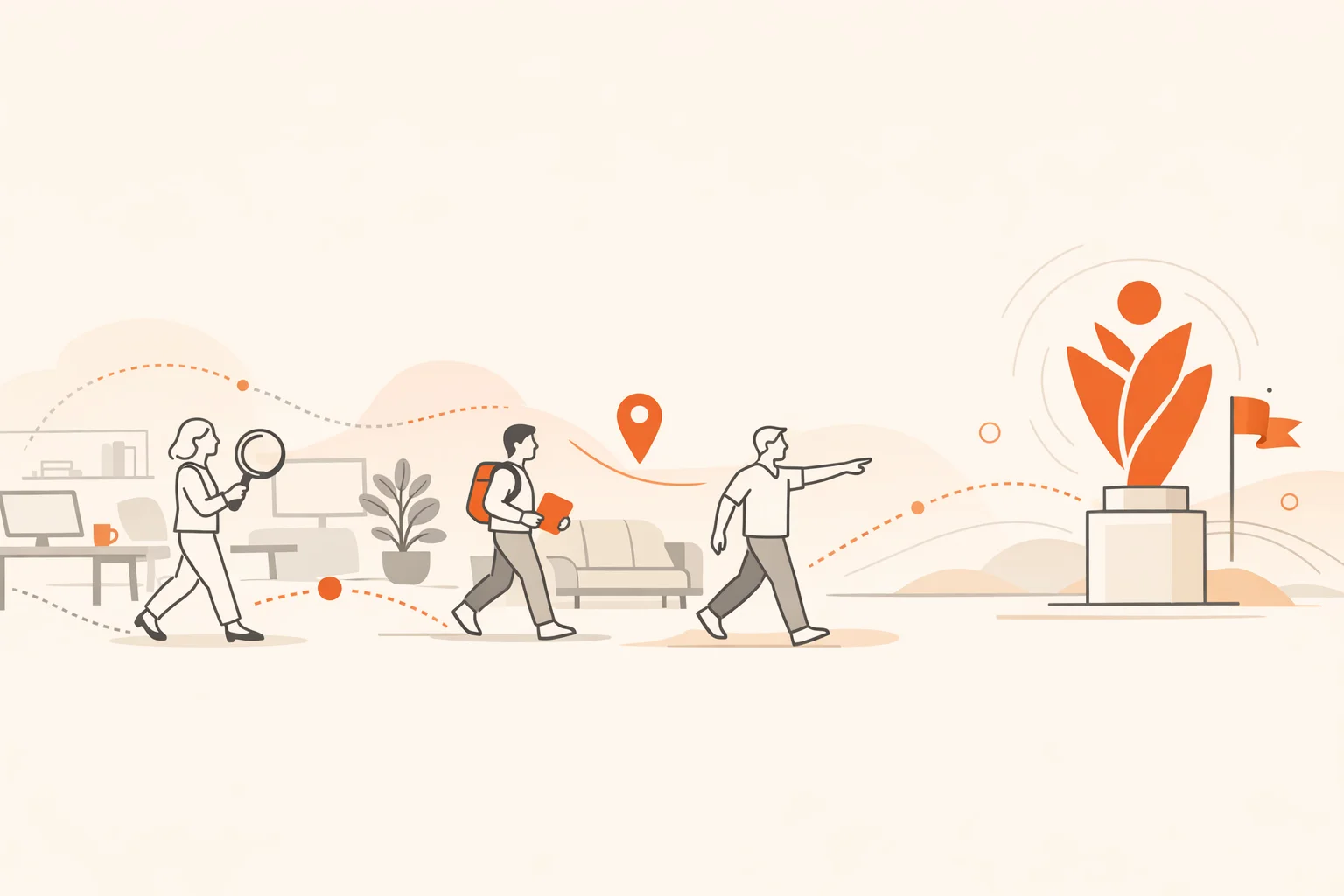
Workplaces don’t need another forced icebreaker. They need movement, laughter, and just enough challenge to make people forget they’re “participating.” A well‑designed office scavenger hunt does exactly that. It turns everyday spaces into a playing field, mixes quick wins with clever solves, and creates real interactions that carry back into work.
Patterns we keep seeing: short challenges beat long ones, variety beats repetition, and visible progress keeps teams pushing. That last point isn’t just a hunch. Google’s research on effective teams highlights psychological safety as foundational for performance; people contribute more when the environment makes risk‑taking feel safe. Scavenger hunts, done right, create exactly that low‑stakes risk space (Google’s Project Aristotle; Harvard Business Review on psychological safety).
Modern tools make the logistics simple. A modern scavenger hunt app lets you mix photo, video, QR, GPS, and trivia challenges, auto‑score submissions, and display a live leaderboard without babysitting the game. What matters most now is the design.
Start with what you already have: your space, your lore, and your people. The 24 ideas below pair quick setup with strong engagement, plus ready‑to‑use challenge prompts you can drop straight into a hunt.

Most teams don’t need louder activities. They need structures that let different personalities contribute without posturing. Quick, concrete tasks do that. They also make progress visible, which nudges people to keep going. The goal‑gradient effect has been shown to increase effort as people get closer to a target; even small signs of progress move behavior in the right direction (Columbia Business School summary of the goal‑gradient effect).
Nobody quits a game they are winning. Your first task should feel winnable.
Kick off with a guaranteed win to settle nerves and spike momentum. Keep it within arm’s reach of where teams begin.
Turn company lore into a short route that ends at a small reveal. A few well‑placed QR codes do the heavy lifting.
Every office has a coffee saga. Use it. Hide simple codes, reward observational humor, and keep it light.
A quick outdoor stretch keeps energy high. Choose spots within a short walk so you don’t lose half the group to logistics.
Use art, signage, or a front‑desk detail for fast, photogenic wins.
Celebrate institutional memory by pointing teams to the longest‑tenured employee’s workstation or story.
Send teams to the nearest after‑work spot. It’s fast, social, and gets people moving.
Highlight a specialized role people depend on but rarely see. Add a micro‑interview for bonus points.
Build a loop that includes stairs, a water station, and the nearest gym to normalize micro‑movement at work.
The copier, printer, or plotter is an underrated puzzle box. Hide a code where only the observant will look.
Nearest gas station by distance from the office. Simple, surprising, quick.
Pick someone with great taste and make their go‑to lunch or coffee spot a GPS target.
This one plays like an improv bit and never fails. Teams give a 15‑second “tour” of a desk as if it were a famous attraction.
Short trivia anchors the story to real dates and names without feeling like a quiz show.
There’s always one bottle in the fridge older than the Wi‑Fi. Make it a gentle roast, not a gross‑out.
Have teams document values alive in the real world: a helpful sign, a well‑run stand‑up, a clean handoff.
Turn required info into a useful micro‑tour: exits, extinguishers, first‑aid kit, and the evacuation map.
Reward good habits people walk past daily: recycling stations, refill taps, energy‑saving sensors.
Every team has rituals. Capture one in a short video: the whiteboard reset, the end‑of‑sprint clap, the test bell.
Challenge teams to spot two easy improvements for clarity or access and document them respectfully.
Teams find someone outside their function and collect a 30‑second voice note: “One thing that makes your job easier.”
Drop a few internal emojis or channel names. Ask teams to decode their origin stories.
With only office supplies, bring the company mascot to life. Short, silly, highly shareable.
End with a short sequence that jumps between spaces, then resolves at the prize table. Keep it brisk and cinematic.
For leaders who care about outcomes beyond a fun afternoon, connect the dots explicitly. Close with five minutes on what worked in the hunt that also works in your team process: clear roles, fast feedback, and a safe place to experiment. That’s not just our observation; it echoes what the research continues to show about effective teams and candid collaboration (Project Aristotle’s five dynamics; SHRM’s practical team‑building guidance).

If you want this to run smoothly without a spreadsheet and a stopwatch, use a platform that handles submissions, scoring, and the live feed while you watch the room come alive. Then iterate. The second hunt is always better than the first, because now the office is part of the game.